Complete 2026 Workout Guide: Strength, Cardio & Exercise Tips
Strength training, Zone 2 cardio, and progressive overload dominate 2026 fitness. Learn how to build a sustainable workout plan that works for every level.
Key Takeaways
- Strength training participation: 32.1% of gym members now train with dumbbells or free weights, but participation drops significantly with age, falling from 44.5% among men aged 18-44 to just 22% at age 65 and older, highlighting the need for accessible, age-appropriate workout guidance.
- Gym anxiety affects 50% of beginners: Around 50% of people experience gym intimidation, making it one of the most common barriers to starting a fitness routine, though anxiety is strongest in the first 4-6 weeks and decreases with consistent attendance.
- Progressive overload doubles muscle growth: A 2026 study on untrained lifters found that progressive overload roughly doubles muscle growth versus training with the same weight and reps every session, with double progression (adding reps before adding weight) recommended for beginners.
- Home workout adherence is 23% higher: A 2023 study found that home exercisers had 23% higher long-term adherence rates than gym-goers, with 61% of people now training at home and the home gym equipment market expected to reach $14.2 billion by 2028.
- Zone 2 cardio gains mainstream acceptance: Low-intensity steady-state cardio at 60-70% of max heart rate improves mitochondrial function and cardiovascular health without the stress of HIIT, with lifters and power athletes increasingly incorporating it into weekly programming.
- Quality trumps volume in 2026 training: The fitness landscape now prioritizes effective working sets with proper loading and adequate recovery over marathon workouts, with emphasis shifting from max lifts and aesthetics to health, mobility, and long-term independence.
Why 2026 Is the Year Workout Guidance Changed
Strength training has moved from a corner of the gym to the center of how Americans train. According to the Health & Fitness Association, 32.1% of gym members now train with dumbbells or free weights, marking a significant shift in training preferences. But the numbers tell a more complex story about who's actually lifting and who's getting left behind.
Among men, participation drops from 44.5% at ages 18 to 44, to 29.9% at ages 45 to 64, and to just 22% at age 65 and older. Women follow the same pattern, sliding from 34.1% to 23.8% to 17.2% across the same age ranges. This participation gap highlights an urgent need for accessible, age-appropriate workout guidance that meets people where they are, not where Instagram fitness culture says they should be.
Meanwhile, the narrative around fitness itself has fundamentally shifted. In 2026, wearables, programs for older adults, weight management, and functional fitness remain dominant themes, but the focus is shifting toward quality, personalization, and long-term wellbeing. Movement quality, injury prevention, and sustainable habits now take priority over max lifts and aesthetic goals.
The Home Gym Revolution and Where It Leaves Beginners
The home workout landscape has permanently changed how Americans approach fitness. Currently, 61% of people train at home and 61% have a designated workout space in their homes, compared to only 31% who hold commercial gym memberships. The home gym equipment market exploded from $6.76 billion to over $9.49 billion in 2020, and growth continues with projections reaching $14.2 billion by 2028.
Why the sustained appeal? A 2023 study in Frontiers in Psychology found that home exercisers had 23% higher long-term adherence rates than gym-goers. The reason wasn't that home workouts are inherently superior, but that the lower barrier to entry means people actually do them consistently. And consistency is what produces results, regardless of whether you're lifting in a basement or a boutique studio.
For those who do want to train at commercial gyms, however, anxiety remains a major obstacle. Around 50% of people experience some level of gym intimidation, making it one of the most common barriers to starting a fitness routine. Lack of competence is a major driver: not knowing proper technique, gym etiquette, or how to structure a workout creates decision paralysis and discomfort.
How to Overcome Gym Anxiety in the First Six Weeks
The good news for beginners facing gym intimidation: anxiety is strongest in the first 4-6 weeks, and getting through that window is the most important thing you can do. Several practical strategies can reduce that initial friction and build confidence quickly.
First, having a written plan before you walk through the gym door reduces decision paralysis and keeps workouts focused and efficient. Instead of wandering the floor wondering what to do next, you follow a simple sequence: warm-up, three or four exercises, cool-down, done.
Second, going to the gym with a friend is one of the fastest ways to lower the barrier to entry. A training partner provides mutual encouragement, shares the discomfort of being new, and makes the experience feel less exposed. Third, learning proper technique and gym etiquette not only improves safety but also reduces anxiety. Even one session with a qualified trainer or watching reputable instructional videos can provide the foundational knowledge that makes everything feel more manageable.
Progressive Overload: The Framework That Doubles Muscle Growth
If there's one principle that separates effective strength training from simply going through the motions, it's progressive overload. A 2026 study on untrained lifters found that progressive overload roughly doubles muscle growth versus training with the same weight and reps every session. The concept is simple: gradually increase the challenge your muscles face over time, and your body adapts by getting stronger.
However, beginners often misunderstand the principle and chase heavier weights too quickly. Your first session isn't about finding your limits. It's about picking a weight you can control through a full range of motion, for every rep, with room to spare. If you've never lifted before, start lighter than you think you need to.
The most effective beginner progression method is double progression. Begin at the bottom of a rep range, such as three sets of 8 reps. Keep the load fixed while adding clean repetitions across sessions until you reach the upper limit, such as three sets of 12 reps. Once every set hits that upper limit, increase the load by the smallest practical amount (typically 5 pounds for lower body, 2.5 pounds for upper body) and return to the lower rep range. Small, consistent improvements are usually safer and easier to recover from than forcing heavier weights too quickly.
Progressive overload isn't limited to adding weight. Beginners can overload by adding reps, adding sets, improving tempo (slower eccentric or controlled pauses), shortening rest slightly, increasing range of motion, improving technique quality, or choosing a harder exercise variation. These options give you flexibility when weights stall or recovery feels limited.
Quality Over Volume: Why Most Lifters Do Too Much
One of the clearest trends in 2026 strength training is the shift from high-volume marathon workouts to focused, high-quality sessions. Most lifters are doing too much ineffective volume, and the new rule prioritizes effective working sets performed with intention, proper loading, and adequate recovery. For most lifters, this means fewer total sets per muscle group per week but higher quality execution.
Technique matters most. Lifting heavier weight only works when it's lifted well. The new rule emphasizes intent on every rep: controlled eccentrics, stable positions, and consistent execution. Beginners should treat technique as a skill, similar to learning a musical instrument or a new language, because every high-quality rep teaches your nervous system what to repeat. Before chasing heavier dumbbells, aim to make your reps look nearly identical from the first set to the last set.
This approach emphasizes hitting the minimum effective dose and then progressing strategically rather than surviving grueling sessions that compromise form and delay recovery. For a beginner, that might mean two to three working sets per exercise, two to three exercises per muscle group per week, with full focus on execution and gradual load increases every one to two weeks.
Zone 2 Cardio and the Decline of HIIT Dominance
While high-intensity interval training dominated the 2010s, 2026 marks a significant shift in how people approach cardiovascular training. The longevity and health optimization community discovered that Zone 2 cardio improves mitochondrial function, metabolic flexibility, and cardiovascular health without the stress and fatigue of HIIT. More lifters, power athletes, and even bodybuilders are now incorporating Zone 2 training into their weekly programming.
Zone 2 training refers to low-intensity, steady-state cardio performed at 60 to 70% of your max heart rate. Unlike an all-out sprint or a grueling HIIT session, Zone 2 is performed at a pace where you can hold a conversation but still feel challenged. This might look like a brisk walk, easy jog, bike ride, or swim where your heart rate stays elevated but your breathing remains controlled.
The benefits extend beyond cardiovascular health. Zone 2 cardio supports recovery between strength sessions, improves aerobic base without interfering with muscle growth, and builds work capacity that makes everyday activities feel easier. For beginners balancing strength training and cardio, two to three 20- to 30-minute Zone 2 sessions per week on non-lifting days provide a sustainable, low-stress foundation.
Building a Complete Weekly Workout Plan for 2026
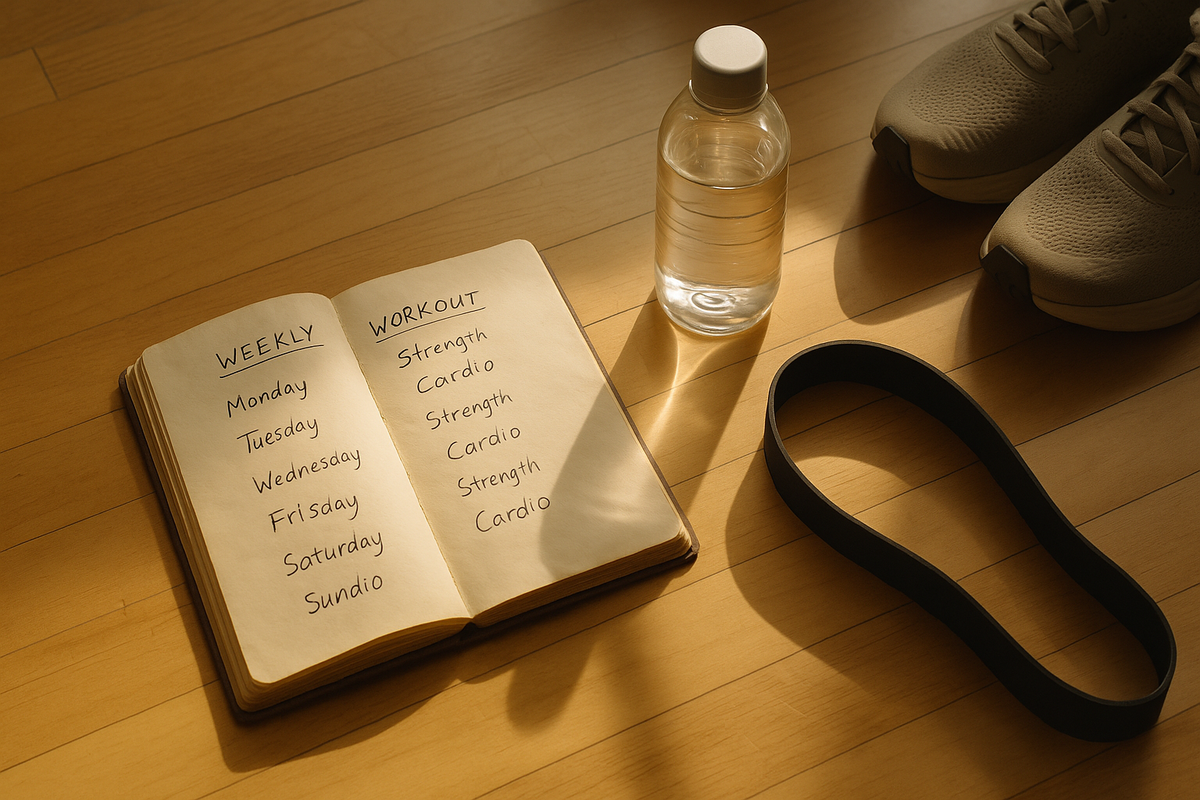
A practical, sustainable weekly workout plan for beginners in 2026 balances strength training, cardio, and recovery. Here's a sample framework that aligns with current best practices and can be adapted for home or gym settings.
- Monday: Full-body strength session with 4-5 compound exercises (squats, push-ups, rows, hinges), 2-3 working sets per exercise, 8-12 reps, focus on controlled tempo and form.
- Tuesday: 20-30 minutes Zone 2 cardio (brisk walk, easy bike, swim) at 60-70% max heart rate.
- Wednesday: Active recovery or rest (light stretching, walking, mobility work).
- Thursday: Full-body strength session with different exercise variations, same volume and intensity as Monday.
- Friday: 20-30 minutes Zone 2 cardio.
- Saturday: Optional third strength session or longer Zone 2 session (30-45 minutes).
- Sunday: Rest or gentle movement (yoga, walking, recreational activity).
This structure provides two to three strength sessions per week, two to three cardio sessions that support rather than compromise recovery, and built-in rest days. Beginners should start at the lower end of volume (two strength, two cardio) and add sessions only after several weeks of consistent execution and adequate recovery.
What This Means for Readers
Editorial analysis — not reported fact:
If you're new to structured exercise or returning after time away, the 2026 fitness landscape offers a more forgiving, evidence-based path than ever before. You don't need to train six days a week, chase Instagram-worthy lifts, or survive punishing HIIT sessions to see real progress. The research and industry trends converge on a simpler message: start lighter than you think, focus on quality reps, add small increments of challenge consistently, and give your body time to adapt.
For the 50% of people who feel gym anxiety, know that the discomfort peaks in the first month and fades with familiarity. A written plan, a training partner, and a few sessions focused on learning proper form can transform the gym from an intimidating maze into a predictable, manageable routine. And if the gym still feels like too much, home workouts offer statistically better adherence, lower barriers, and real results when performed consistently.
Zone 2 cardio gives you a low-stress, high-benefit option that complements strength work without exhausting you. Two to three easy 20-minute sessions per week improve heart health, support recovery, and build the aerobic base that makes daily life feel easier. Combined with two full-body strength sessions emphasizing progressive overload and quality execution, you have a complete, sustainable program that fits into real life.
The shift from volume to quality, from aesthetics to health, and from intensity to consistency reflects a maturation of fitness culture. It's no longer about doing the most; it's about doing what works, what lasts, and what genuinely improves how you move, feel, and live. That's a framework anyone can start today, regardless of age, experience, or access to equipment.
Sources & Further Reading
- Health & Fitness Association industry data on strength training participation — demographic breakdowns and trends for 2026.
- Frontiers in Psychology study on home exercise adherence and gym anxiety — research on adherence rates, gym intimidation prevalence, and progressive overload effects in untrained lifters.
- Home gym equipment market projections and Zone 2 cardio guidance — market data, training philosophy shifts, and cardiovascular training best practices.
Editorial coverage of publicly reported health, fitness, wellness, nutrition, and active living developments. Move Weekly has no commercial relationship with any companies, gyms, studios, brands, events, experts, products, or organizations named.