Progressive Overload: How Americans Build Strength in 2026
Progressive overload accounts for 70-80% of strength gains. Here's what the 2026 ACSM guidelines and latest research say about building muscle smarter.
Key Takeaways
- Progressive overload drives 70-80% of long-term strength gains and is experiencing a major resurgence in 2026 as Americans shift focus from weight loss to building functional strength and muscle.
- Strength training is now America's top fitness priority for 2026, with 42.3% naming getting physically stronger as their primary health goal and 46.5% planning to lift more weights.
- The optimal training dose is 10-20 sets per muscle group per week, according to recent research, with loads ranging from 30% to 100% of your one-rep max producing similar results when effort and volume are matched.
- The 2026 ACSM Position Stand confirms training to failure is not necessary for muscle growth or strength gains in healthy adults, emphasizing that consistency and honest effort matter more than complex programming.
- Muscle serves as "metabolic armor" for longevity, playing critical roles in glucose disposal and protecting against sarcopenia, the age-related muscle loss that begins in our 30s.
- Form and breathing technique remain essential for injury prevention, as muscle strains account for 30-44% of all gym injuries, typically from excessive load or compromised technique.
Why Progressive Overload Is Dominating American Strength Training in 2026
After years of boutique fitness trends and aesthetics-focused training programs, American gym-goers are returning to a fundamental principle that accounts for the majority of muscle and strength gains: progressive overload. This training approach, which involves systematically increasing the demands placed on your muscles over time, is experiencing a major comeback in 2026 as strength training officially overtakes weight loss as the nation's top fitness priority.
The numbers tell a compelling story. According to recent consumer surveys, 42.3% of Americans now cite getting physically stronger as their primary health goal for 2026, while 46.5% plan to lift more weights this year. This shift represents more than a passing trend. It reflects a fundamental reorientation from vanity-driven training toward building capability, function, and long-term health.
The timing aligns with a landmark scientific update: the American College of Sports Medicine published its first comprehensive Position Stand on resistance training since 2009, offering evidence-based guidance that demolishes outdated myths and provides accessible recommendations for everyday lifters.
The Science Behind Progressive Overload and Muscle Growth
Progressive overload operates on a simple premise: to continue building muscle and strength, you must gradually increase the stress placed on your muscles beyond what they've adapted to. This progression can come from adding weight, increasing repetitions, adjusting tempo, or changing movement complexity.
Recent research validates this approach. A 2024 meta-analysis published in the International Journal of Sports Medicine found that both load progression (adding weight) and repetition progression (adding reps) increased one-rep max values and muscle cross-sectional area similarly over 10 weeks. The key insight: progression itself matters more than the specific method you choose.
The dose-response relationship is now well established. Research indicates the minimum effective dose is 4 sets per muscle group per week, the optimal range sits at 10-20 sets per muscle group per week, and diminishing returns occur beyond 20 sets. For muscle growth specifically, loads from 30% to 100% of your one-rep max produced similar results as long as effort remained high and volume was equated.
What the 2026 ACSM Guidelines Changed About Strength Training
The new ACSM Position Stand represents the most comprehensive update to resistance training recommendations in nearly two decades. The guidance challenges several entrenched beliefs that have dominated gym culture for years.
First, training to momentary muscle failure is not necessary for building strength or size in healthy adults. While training close to failure can be effective, the ACSM notes that consistently pushing every set to absolute failure doesn't consistently improve results and may increase injury risk and recovery demands.
Second, the guidelines emphasize that the most meaningful gains come from a simple shift: moving from no resistance training to any form of resistance training. While specific training variables can be optimized, the primary goal for most adults should be regular participation in any form of strength work. This means bodyweight exercises, resistance bands, and home-based routines yield marked benefits in strength, muscle growth, and physical function.
Third, the research confirms that machines versus free weights, complex periodization schemes, and other advanced programming variables matter far less than showing up consistently and putting in honest effort. For the average healthy adult seeking strength and muscle gains, consistency beats perfection.
Why Tracking Your Workouts Is Non-Negotiable for Progress
Progressive overload only works when it's measured. Without tracking your weights, repetitions, sets, and performance over time, you're guessing rather than progressing. This is where the 2026 strength training landscape differs sharply from previous eras: logging is no longer optional for serious progress.
The tools have evolved significantly. Wearables, velocity-based training systems, recovery tracking devices, and AI-powered workout programming now help lifters make smarter decisions about when to increase weight, when to deload, and when to take recovery days. Instead of relying on feel alone, you can use objective performance data to guide your training decisions.
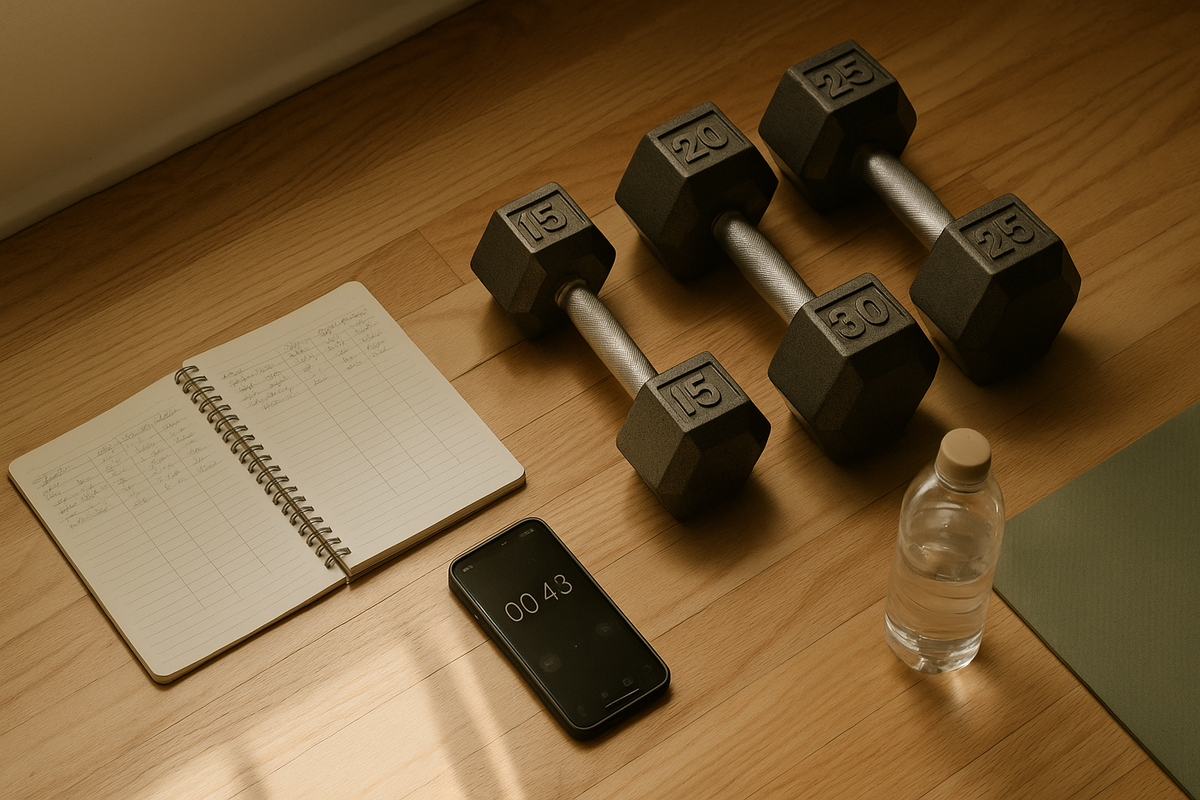
For those without high-tech equipment, a simple notebook or smartphone app that records exercises, weights, reps, and rest periods provides the essential data needed to ensure you're actually overloading your muscles week to week. The act of recording itself creates accountability and reveals patterns that might otherwise go unnoticed.
Muscle as Metabolic Armor: The Longevity Angle Driving Older Lifters
Among longevity-focused Americans, especially those over 40, muscle tissue is increasingly understood as what experts now call "metabolic armor." This term refers to muscle's critical roles in glucose disposal, cytokine signaling, and protection against sarcopenia, the age-related loss of muscle mass that begins in our 30s and accelerates after 60.
This perspective is driving a significant shift away from high-repetition "toning" workouts toward progressive overload with heavy compound lifts among older adults. The goal isn't aesthetic, it's preserving independence, metabolic health, and physical capability as we age.
The muscle-preservation message has also reached those using GLP-1 medications for weight loss. Medical guidance increasingly emphasizes that individuals using these medications should prioritize strength training to preserve lean mass while losing fat, as rapid weight loss without resistance training can result in significant muscle loss alongside fat loss.
Functional Strength Training Rises as Americans Prioritize Capability Over Appearance
Functional fitness just climbed to the 10th most popular fitness trend according to ACSM's annual survey, up from 12th the previous year. This isn't a social media fad, it represents a genuine correction after a decade of programs built for appearance over real-world capability.
Functional fitness training builds strength, power, mobility, and endurance through movement patterns your body uses daily: squatting, hinging, pushing, pulling, carrying, and rotating. Instead of isolating single muscles on machines, functional training links multiple joints and muscle groups together in coordinated patterns.
Compound exercises like squats, deadlifts, cleans, push presses, and farmer carries remain staples because they develop coordination, power, balance, and total-body strength that translates directly to activities outside the gym. Gym operators have responded by widening free-weight areas, adding squat racks and lifting platforms, and reducing rows of cardio machines.
Form, Breathing, and Injury Prevention Remain Critical
As more Americans lift heavier weights in pursuit of progressive overload, proper form and breathing technique become non-negotiable. Muscle strains account for approximately 30-44% of all gym injuries, typically occurring when muscle fibers are overstretched or torn during sudden movements or when lifting weights beyond current capacity.
Using weights that are too heavy for your current strength level compromises form and dramatically increases injury risk. One of the most effective strategies for injury prevention is proper breathing: exhale during exertion (when lifting or pushing) and inhale during relaxation (when lowering the weight). This ensures steady oxygen flow and prevents excessive strain on muscles.
Correct form is vital at every experience level. For those new to strength training or learning new movement patterns, working with a qualified trainer or using video analysis can identify compensations and technique flaws before they become ingrained or lead to injury.
What This Means for Readers
Editorial analysis — not reported fact:
The 2026 strength training landscape offers a rare moment of clarity. After years of conflicting advice, over-complicated programs, and trends built more for engagement than results, the science and consumer priorities have aligned around a handful of fundamental principles that work for most people, most of the time.
If you're new to strength training, the barrier to entry has never been lower. You don't need a perfect program, expensive equipment, or a genetic gift. You need to start with any form of resistance training, track your workouts, progressively challenge your muscles week to week, and show up consistently. Bodyweight exercises, resistance bands, or a basic set of dumbbells at home will produce real results if you follow these principles.
If you've been training for years but feel stuck, the 2026 research offers permission to simplify. You don't need to train to failure on every set, follow complex periodization, or obsess over machines versus free weights. Focus on the variables that matter most: accumulating 10-20 sets per muscle group per week, progressively overloading over time, maintaining solid form, and recovering adequately between sessions.
For older adults and those focused on longevity, the message is clear: muscle is not optional. Sarcopenia and metabolic decline are not inevitable consequences of aging, they're consequences of inactivity and insufficient strength training. Starting or returning to progressive resistance training in your 40s, 50s, 60s, or beyond can rebuild lost muscle, improve metabolic health, and preserve the physical capability that maintains independence.
As with any exercise program, especially if you're new to strength training, managing a chronic condition, recovering from injury, or pregnant, consult with a qualified healthcare professional or certified trainer before beginning.
Sources & Further Reading
- ACSM updates resistance training recommendations for healthy adults — landmark 2026 Position Stand summarizing evidence-based guidance on resistance training for healthy adults
- Resistance Training for Health and Performance for Adults: ACSM Position Stand — full peer-reviewed Position Stand published in Medicine & Science in Sports & Exercise
- Load Progression vs. Repetition Progression in Resistance Training: A Systematic Review and Meta-Analysis — 2024 meta-analysis comparing progression methods in the International Journal of Sports Medicine
- The "Hypertrophy Rep Range" – Fact or Fiction? — research summary on load ranges and muscle growth from Stronger by Science
- ACSM Fitness Trends and Physical Activity Guidelines — annual survey tracking top fitness trends including functional fitness
- Epidemiology of Injuries in Resistance Training: A Systematic Review — research on injury rates and types in strength training settings
Editorial coverage of publicly reported health, fitness, wellness, nutrition, and active living developments. Move Weekly has no commercial relationship with any companies, gyms, studios, brands, events, experts, products, or organizations named.