Progressive Overload & the 2026 Strength Training Update
ACSM's first resistance training guideline update in 17 years confirms consistency beats complexity, and honest effort matters more than equipment or load.
Key Takeaways
- Progressive overload remains the foundation of muscle building, but the American College of Sports Medicine's March 2026 guidelines confirm that consistency matters more than complex periodization, training to failure, or equipment variety.
- Any resistance training beats no resistance training; the biggest gains come from moving from zero sessions per week to two, with all major muscle groups trained at least twice weekly as the recommended starting point.
- Load ranges from 30% to 100% of one-rep max all build muscle equally when sets are taken close to failure, meaning bodyweight exercises performed with honest effort can be as effective as heavy barbell work.
- Women respond to strength training at the same rate or faster than men during the first months, gaining 25% more strength and reducing type 2 diabetes risk by 30% with just two to three sessions per week over 15 weeks.
- GLP-1 medications have shifted the fitness priority; muscle preservation is now the critical intervention, as clinical data shows up to 40% of weight loss on drugs like Zepbound can come from lean muscle without resistance training.
- Proper form prevents the most common injuries—muscle strains in the back, shoulder, and knee—and quality repetitions with lighter weights outperform heavy loads performed with compromised technique.
The ACSM's 2026 Resistance Training Guidelines Simplify Decades of Fitness Dogma
In March 2026, the American College of Sports Medicine released its first major update to resistance training guidelines in 17 years, synthesizing findings from 137 systematic reviews representing more than 30,000 participants. The conclusion is a relief for everyday lifters: the most meaningful gains come from moving from no resistance training to any resistance training, and while specific variables can be tweaked, consistency matters more than a complex program.
The updated guidance recommends a straightforward starting point—train all major muscle groups at least two days per week and build gradually over time. The 2026 update debunks several outdated beliefs, including the necessity of training to momentary muscle failure, needing different equipment and variety for results, and the idea that beginners require fundamentally different regimens than advanced lifters. What the evidence shows is simpler: showing up regularly and putting in honest effort drives results, not elaborate periodization schemes.
Progressive Overload Is Still the Foundation, But Effort Beats Volume
Progressive overload remains the single most important principle for building muscle and strength. Without it, your body has no reason to adapt. But a critical 2024 study found that increases in total training volume don't directly correlate with muscle growth—effort and proximity to failure matter more. This aligns with the ACSM's 2026 finding that hypertrophy was observed across the full load span from about 30 to 100 percent of one-rep max, provided sets were taken close enough to failure.
In practical terms, a set of push-ups taken near failure builds muscle the same way a heavy bench press does, as long as the effort matches. Progressive overload doesn't mean only adding weight to the bar. Other effective strategies include doing more reps or sets, lifting more slowly to increase time under tension, lifting more explosively, increasing training frequency, decreasing rest between sets, and performing more advanced exercise variations.
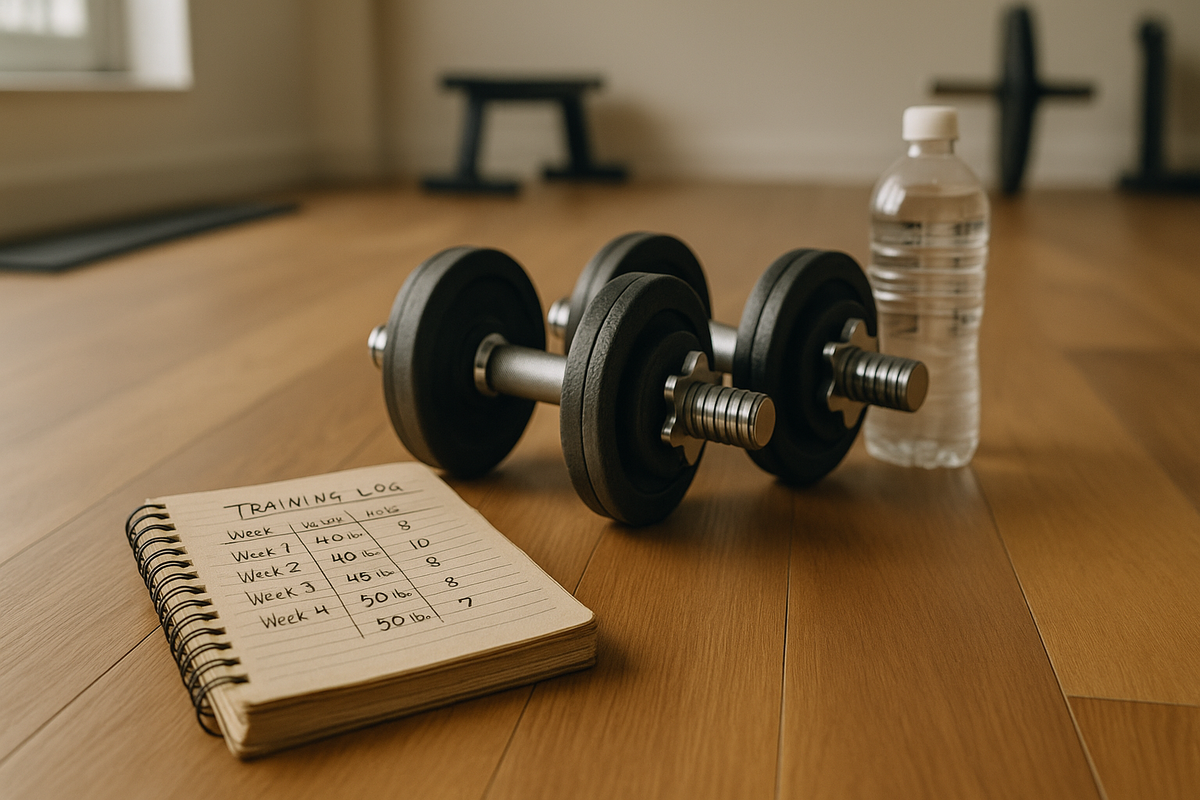
Studies consistently show that lifters who track workouts see better long-term strength gains. Strong is the most recommended pure strength training log across Reddit's r/fitness and r/powerlifting communities, with users praising its ability to build custom workouts, track progressive overload, visualize strength trends over time, and export data.
Women and Strength Training: Functional Fitness Replaces Aesthetic Workouts
In 2026, the fitness industry has pivoted away from aesthetic workouts, moving toward functional strength, and strength training has become the cornerstone of long-term health and longevity for women. Hitting the weights two to three times per week can make women 25% stronger, feel more confident, and decrease their risk of type 2 diabetes by 30% in just 15 weeks.
Women respond to hypertrophy and relative strength gains very much like men do, and several studies actually show they gain strength relative to their starting point at the same rate or even faster during the first months. This is particularly important given that women can lose up to 3–5% of bone mass per decade after age 30, and resistance training is one of the most effective interventions available to slow that loss.
Just 6–12 weeks of strength training with machines significantly improved Timed-Up-and-Go and Sit-to-Stand scores, classic measures of getting out of a chair and walking quickly—functional capacity in its purest form. Functional strength requires movement that connects muscle groups, not isolates them. Kettlebell movements connect muscles like in daily life, and in 2026's fitness landscape, kettlebells are recognized as functional strength super tools.
GLP-1 Medications Make Strength Training Essential, Not Optional
The American College of Sports Medicine ranked Exercise for Weight Management at number three in its 2026 fitness trends report, up from number four in previous years, because of GLP-1 medications shifting how people approach fitness. Muscle preservation, not just calorie burn, is now the load-bearing intervention.
Clinical data shows that without resistance training, GLP-1 medications like Zepbound can cause up to 40% of weight loss to come from lean muscle, making strength training essential, not optional. On GLP-1 medications, weight loss is largely solved; muscle preservation is the new problem, which means resistance training becomes the critical intervention, not cardio, and protein at every meal becomes a programming detail you do not skip.
Form Matters Most for Injury Prevention
A big part of avoiding weightlifting injuries is about letting go of the ego. It's also important to know what proper form looks like, and the goal should always be to perform to a level of fatigue, never pain. The injuries most common in people who lift weights are muscle strains from overuse or acute injury, with the back, shoulder, and knee being the most frequent sites.
Common mistakes during weightlifting include rounding the back, arching the back, using momentum to lift weights, twisting while lifting, and bending from the waist. Using weights that are too heavy compromises form and increases injury risk. Start with lighter weights and gradually increase as you build strength and confidence—quality repetitions with proper form are more important than lifting heavy weights.
What This Means for Readers
Editorial analysis — not reported fact:
The 2026 ACSM guidelines are permission to simplify. If you've avoided strength training because you thought you needed a complicated program, expensive equipment, or a personal trainer to see results, the evidence says otherwise. Two sessions per week, hitting all major muscle groups, with honest effort and progressive increases over time will get you most of the way there. Track your workouts in a simple app or notebook so you know whether you're actually getting stronger.
For women, the message is especially clear: strength training is not about aesthetics anymore. It's about bone density, metabolic health, functional capacity, and independence as you age. For anyone on GLP-1 medications, resistance training is no longer optional—it's the intervention that determines whether your weight loss comes from fat or muscle.
And for everyone, form beats load every time. A lighter weight performed with control and full range of motion will build strength and prevent injury better than a heavy weight lifted with compromised technique. If you're new to strength training or returning after time off, consider working with a qualified trainer for a few sessions to learn proper form for foundational movements like squats, deadlifts, presses, and rows.
Sources & Further Reading
- American College of Sports Medicine — 2026 resistance training guidelines and fitness trends report
- JEFIT: Progressive Overload in 2026 — science-backed guide to continuous strength gains, load ranges, and training to failure
Editorial coverage of publicly reported health, fitness, wellness, nutrition, and active living developments. Move Weekly has no commercial relationship with any companies, gyms, studios, brands, events, experts, products, or organizations named.