Screen Time & Athletic Performance: Digital Habits Sabotage
Evening screen use delays sleep by up to 3 hours, impairs muscle recovery, and fragments focus. How digital boundaries protect fitness gains.
Key Takeaways
- Blue light exposure from screens can suppress melatonin production and delay sleep onset by up to 3 hours, with evening device use shortening sleep duration and impairing recovery from workouts.
- Athletes' performance decreased when exposed to blue light within 3 hours of bedtime, as evening screen time reduces slow-wave sleep critical for muscle regeneration and hormonal balance.
- The average American checks their phone 186 times daily in 2026, fragmenting attention and reducing cognitive capacity needed for workout focus and exercise planning.
- Teens with 4+ daily hours of non-schoolwork screen time are 59.9% likely to report being infrequently well-rested, compared to 40.1% of lighter users, a pattern that extends to active adults.
- Digital wellness strategies reduce technology addiction symptoms by 47% within six months, according to research from the Journal of Behavioral Addictions, with structured boundaries improving sleep and mental restoration.
- 79% of young adults know bedtime device use disrupts sleep but continue the behavior, revealing a critical knowledge-behavior gap that undermines fitness gains and recovery.
Why Screen Habits Are a Fitness Recovery Issue
Americans now spend an average of 6 hours and 40 minutes daily on screens, with US adults averaging 5 hours 16 minutes a day on their phones alone. For fitness-focused individuals, this digital immersion creates a hidden obstacle: screen time directly sabotages the sleep quality and mental focus required for athletic performance and recovery.
The connection is physiological. Evening exposure to blue light from digital devices can suppress melatonin production and delay sleep onset by up to 3 hours, according to research published in 2026. More specifically, phone use within 30 minutes of bedtime is associated with shorter sleep duration, poorer sleep quality, and greater daytime fatigue. For anyone working to build strength, improve endurance, or recover from hard training sessions, this represents lost gains.
The stakes are particularly high for athletes and serious fitness enthusiasts. A recommendation is to reduce blue-light exposure to 3 hours before bedtime, since athletes' performance decreased with this much blue-light exposure. The mechanism is clear: evening blue light exposure may delay sleep onset, shorten total sleep time, reduce sleep efficiency, and disturb sleep architecture, including slow-wave sleep, which may impair muscle regeneration, hormonal balance, cognitive function, physical performance, and readiness for subsequent training sessions.
Screen Time, Sleep Deprivation, and Recovery Metrics
The data on younger active populations is particularly revealing. Among teens with 4+ daily hours of non-schoolwork screen time, 59.9% reported being infrequently well-rested, versus 40.1% of teens with lower screen use. While this research focuses on adolescents, the pattern extends to adults: more screen time correlates with worse sleep outcomes, and worse sleep directly undermines recovery from physical activity.
The mental health dimension compounds the problem. 25.9% of teens with 4+ hours of daily screen time reported depression symptoms versus 9.5% of lighter users, and 27.1% reported anxiety symptoms versus 15.1%. Depression and anxiety both interfere with exercise adherence, motivation, and the energy required to train consistently.
According to research from the Global Wellness Institute, digital wellness is shifting from occasional unplugging to intentional habit design. Yet 79% of young adults acknowledge awareness of sleep risks from bedtime device use but continue the behavior, revealing a significant knowledge-behavior gap.
Attention Fragmentation and Workout Quality
Screen habits damage more than sleep. The average American checks their smartphone about 186 times per day in 2026, creating constant cognitive interruption. The mere presence of a smartphone makes it harder to use one's full cognitive capacity, even without checking the phone, according to research from the University of Florida.
The average American checks their phone 186 total daily checks, losing hundreds of hours of focused productivity to attention fragmentation and cognitive residue from each interruption. For fitness applications, this matters during workout planning, form focus during strength training, pacing strategy during runs, and mindful recovery practices like stretching or meditation.
The cognitive impact is measurable. Even 48-hour digital detoxes improved attention span and working memory by about 23%. More directly relevant to athletic performance, exposure to blue light starting at 9:00 PM results in shorter sleep duration and longer time to fall asleep, and it impairs cognitive function, especially in tasks that need sustained attention.
Smartphone Addiction and Behavioral Patterns
Roughly 57% of Americans admitted they feel addicted to their smartphones in recent surveys. The neuroscience supports this self-assessment. A 2025 study in the Journal of Behavioral Addictions used fMRI imaging comparing brain activity in people with diagnosed smartphone addiction to people with substance use disorders, with patterns strikingly similar, particularly in the prefrontal cortex and reward centers.
This addictive quality makes it difficult to implement boundaries, even when people understand the consequences. Modern people experience more stress and anxiety signs because there is a kind of necessity to stay online and respond in real-time, and social pressure to stay online can have adverse effects on mental health. The result is a cycle: screens disrupt sleep, poor sleep increases stress, stress drives more screen-seeking behavior for distraction or social connection.
Social Media, Fitness Content, and Motivation Paradoxes
For fitness enthusiasts, social media presents a double-edged relationship. Fitness social media use significantly predicts intrinsic motivation, exercise intention, and exercise behavior, suggesting that seeing workout content can inspire action. However, fitness social media use is significantly positively associated with exercise frequency but not exercise history, and overall social media use is significantly negatively associated with exercise history, indicating short-term motivation but poor long-term adherence.
The psychological impact varies by individual. For some people, seeing exercise-related social media posts made them feel motivated to work out, but for others, viewing fitness posts had a negative effect on their body image. Additionally, time female participants spent on social media was associated with higher levels of thin-idealization, objectified body consciousness, and exercise motivation, mixing body image concerns with fitness intentions.
Doomscrolling as a Sedentary Competitor to Physical Activity
Doomscrolling reinforces negative thoughts and feelings, causes significant irritability, increases anxiety and depression, and can cause panic attacks. About 1 in 6 people (16.5%) show signs of problematic news consumption severe enough to impact their stress, anxiety, and overall health.
Recent studies found that doomscrolling predicts higher levels of anxiety, depression, stress, and existential worry, with heavy doomscrollers experiencing reductions in both life satisfaction and harmony. Critically, doomscrolling tends to be a sedentary activity done indoors, directly competing with the time and mental energy required for physical activity.
Digital Boundaries as Practical Wellness Strategy
Strategic digital boundaries, such as phone-free spaces and intentional tech use, are part of helping focus, presence and mental restoration. The evidence supporting structured interventions is strong. Research from the Journal of Behavioral Addictions demonstrates that implementing structured digital wellness strategies reduces technology addiction symptoms by 47% within six months.
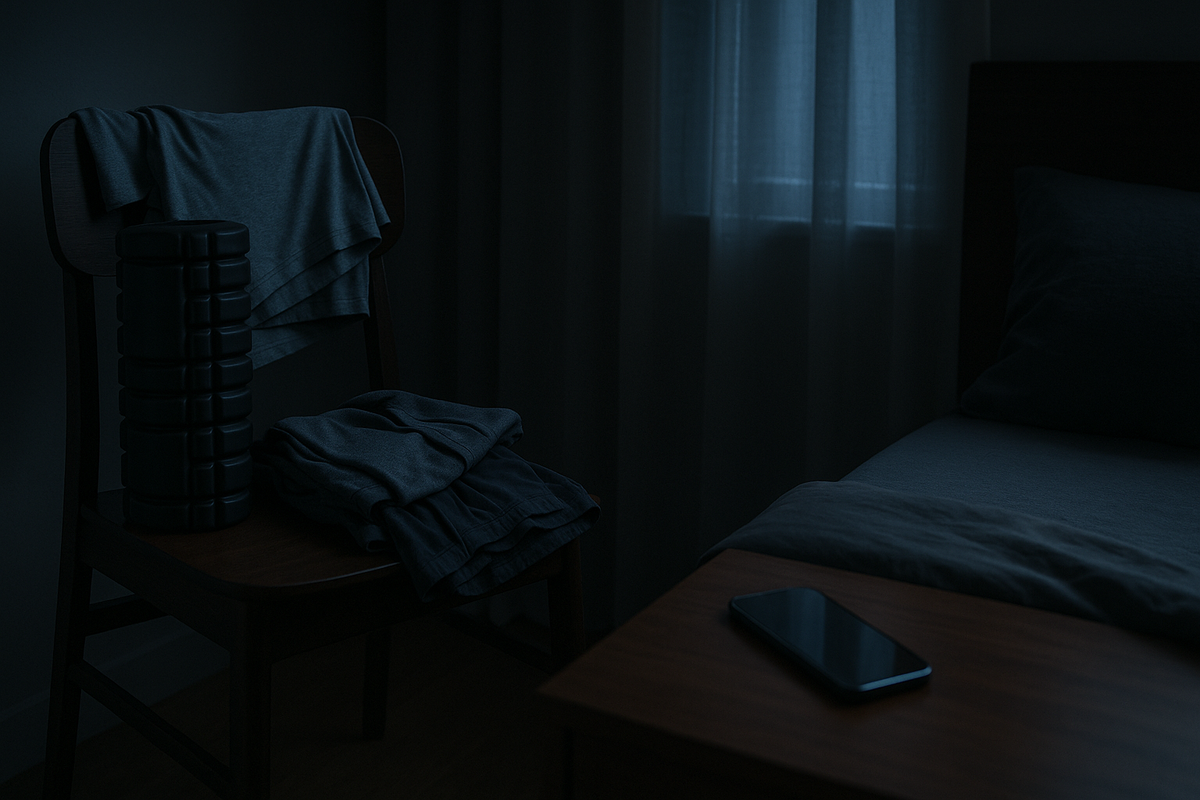
Specific tactics show promise. Establish three daily defensive practices: schedule two-hour tech-free blocks, use apps in grayscale mode, and keep devices out of your bedroom. Awareness is growing: over the last two years, Americans tracking their screentime increased by 21%, showing increased recognition of the issue.
What This Means for Readers
Editorial analysis — not reported fact:
If you are training for a race, building strength, or simply trying to move more consistently, your phone habits may be the invisible ceiling on your progress. The research is unambiguous: evening screen use shortens sleep, fragments attention, disrupts recovery, and competes directly with the time and mental energy required for exercise. The 3-hour pre-bedtime boundary for blue light exposure is particularly actionable for athletes and active adults aiming to protect slow-wave sleep and next-day performance.
Practical starting points include keeping your phone out of your bedroom entirely, setting a firm device curfew 3 hours before your target sleep time, and scheduling dedicated tech-free blocks during the day to protect workout focus and planning time. If you use fitness apps or social media for motivation, consider time-limiting those platforms and curating your feed to minimize comparison-driven content that may harm body image or long-term adherence.
The knowledge-behavior gap is real. Knowing that screens hurt sleep is not enough; structured habits and environmental design, such as charging your phone in another room or using grayscale mode, are necessary to override the addictive pull of constant connectivity. For anyone serious about fitness gains, digital wellness is not optional self-care. It is foundational recovery strategy.
Individuals with sleep disorders, chronic health conditions, mental health concerns, or those taking medications that affect sleep or mood should consult a healthcare professional when making significant changes to sleep hygiene or screen habits.
Sources & Further Reading
- PMC research on blue light, melatonin suppression, and athletic performance — covers sleep onset delay, slow-wave sleep disruption, and 3-hour pre-bedtime exposure recommendations
- PubMed study on bedtime phone use and sleep quality — examines associations between device use within 30 minutes of sleep and next-day fatigue
- PMC research on adolescent screen time and rest — reports on sleep quality, depression, and anxiety rates among high screen-time users
- Habitdoom screen time statistics for 2026 — provides daily averages, phone checks, and knowledge-behavior gap data
- University of Florida CareerHub on technology and attention — discusses smartphone presence effects and 48-hour detox cognitive improvements
- SQ Magazine smartphone addiction statistics — includes fMRI imaging study comparing phone addiction to substance use disorders
- PNAS Nexus research on fitness social media and exercise behavior — analyzes motivation, body image, and long-term adherence patterns
- Global Wellness Institute sleep trends for 2026 — covers doomscrolling, digital boundaries, and structured wellness strategies
- Pagelock phone addiction statistics — reports daily phone check averages for 2026
Editorial coverage of publicly reported health, fitness, wellness, nutrition, and active living developments. Move Weekly has no commercial relationship with any companies, gyms, studios, brands, events, experts, products, or organizations named.