Adaptive & Inclusive Fitness Moves Mainstream in 2026
From no-cost adaptive gyms to 23,500 newly trained inclusive fitness pros, accessible fitness has shifted from niche to industry imperative in 2026.
Key Takeaways
- Adaptive fitness has moved from niche specialty to mainstream imperative in 2026, with major fitness certifications, equipment manufacturers, and dedicated gyms expanding offerings as 61 million disabled Americans represent both a significant market opportunity and a community expectation for inclusion.
- Nearly 23,500 fitness professionals worldwide have registered for inclusive fitness training developed by the American Council on Exercise and Special Olympics International, addressing the gap where more than 90% of people with disabilities believe trainers lack adequate preparation to work with them.
- New gyms like Waco Adapt (opened April 2026) offer specialized adaptive equipment and programming at no cost to members, demonstrating that accessible fitness can be financially sustainable while removing traditional cost barriers that prevent many disabled individuals from participating.
- True accessibility requires both physical infrastructure and trained staff: a clear 36-inch-wide path throughout facilities, adaptive equipment like low-entry bikes and machines with removable seats, and coaches educated in disability-inclusive, trauma-informed, and weight-inclusive approaches.
- Online and hybrid fitness platforms provide critical alternatives for people who face cost, transportation, or intimidation barriers at traditional gyms, with services like Move United OnDemand offering instructor-led adaptive workouts accessible from home.
- People with intellectual disabilities face twice the obesity and heart disease risk of their peers and die 16 years earlier on average, yet only about 10% meet World Health Organization physical activity guidelines, underscoring the urgent health equity need for inclusive fitness access.
Why Adaptive and Inclusive Fitness Became a Mainstream Fitness Industry Priority
In 2026, adaptive and inclusive fitness has shifted from specialty programming to an industry-wide imperative. Sixty-one million disabled Americans represent both a significant market opportunity and a moral obligation for fitness facilities, and according to Lakeshore Foundation research, more than 90% of people with disabilities do not believe fitness professionals are adequately trained to work with them. This training gap is closing rapidly.
In January 2026, the American Council on Exercise (ACE) and Special Olympics International announced a two-year extension of their partnership to promote inclusion and accessibility in fitness. Their "Special Olympics Inclusive Fitness Training" course has enrolled nearly 23,500 individuals worldwide to date, signaling a profession-wide commitment to disability-inclusive coaching.
The push extends beyond disability access. Consumers increasingly expect fitness spaces to honor different bodies, abilities, backgrounds, and experience levels through weight-inclusive approaches, trauma-informed communication, and beginner-safe programming that rejects one-size-fits-all models.
Real Gyms Leading the Accessible Fitness Movement in 2026
Waco Adapt opened in April 2026 with a soft launch, offering community exercise classes, rehabilitation services, and specialized adaptive equipment entirely free to members. Physical therapist Antonia Silva and her business partner Edwin Munoz created the gym after Silva's patients struggled to find places to exercise after completing therapy, proving that accessible fitness can operate sustainably without membership fees.
In Massachusetts, Inclusive Fitness operates as a sensory-friendly, adaptive fitness center with coaches trained to support neurodivergent athletes through personalized programs. Every Body Athletics focuses on adults with intellectual and developmental disabilities through inclusive group exercise, with classes designed by staff holding Master's degrees in Special Education and Doctoral degrees in Occupational Therapy.
Clarity Fitness in Georgia stands out as the only gym with trainers specifically trained in Health at Every Size, Body Positive, and Eating Disorder informed movement, able to collaborate with eating disorder recovery treatment teams. These facilities demonstrate that inclusive fitness requires specialized knowledge, not just goodwill.
What Accessibility and Inclusivity Actually Mean in Practice
Accessibility refers to whether a person can physically access and safely use a facility and its amenities. Inclusivity speaks to how welcomed and comfortable a person feels once inside. Both dimensions matter, and both require intentional design.
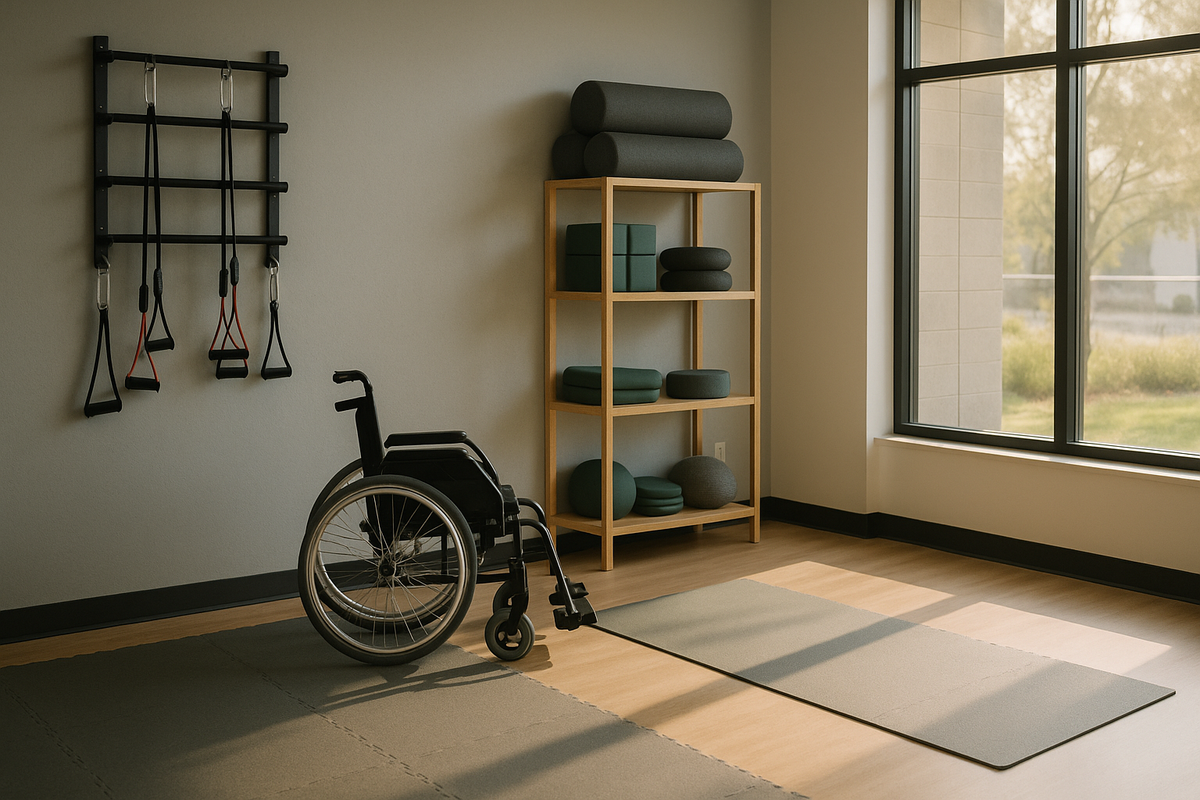
Physical infrastructure includes an accessible route—a clear, 36-inch-wide path from parking lot through the building to all gym areas—without steps, stairs, or obstructions. Adaptive equipment is vital: low-entry exercise bikes, strength training machines with removable seats, and other modifications that accommodate various mobility and sensory needs.
But equipment alone falls short. Lakeshore Foundation research shows that qualified and experienced gym staff significantly impact a gym's true accessibility. Standardized inclusion training for all staff—from front desk to personal trainers—has become a key differentiator as facilities recognize that knowledgeable coaching transforms adaptive equipment from unused novelty to essential tool.
The Health Equity Urgency Behind Adaptive Fitness Expansion
People with intellectual disabilities face stark health disparities: they are two times more likely to be obese, have heart disease, and die 16 years earlier than their age-related peers. Physical activity can decrease these risks, yet only about 10% of people with intellectual disabilities meet World Health Organization physical activity guidelines.
Over the last 15 years, adaptive fitness has emerged as a transformative approach designed to accommodate individuals with disabilities. Traditional gyms remain inaccessible or inadequate for people with mobility issues or sensory impairments, but growing awareness has accelerated the evolution of adaptive fitness programs that break these barriers through custom-designed exercises catering to individual needs.
Adaptive fitness modifies traditional exercise methods to accommodate physical, cognitive, and age-related impairments. Rather than one-size-fits-all programming, adaptive fitness trainers design programs recognizing that everyone has distinct capabilities, limitations, and goals, often incorporating assistive devices, altered equipment, and customized routines.
How Online and Hybrid Models Remove Cost and Transportation Barriers
On-site gyms have limited capacity to accommodate people with disabilities, membership can be costly, and customized fitness programs along with adaptive devices are often unavailable. Many individuals with disabilities cite budget as a serious factor preventing gym sign-up.
The online route, when made inclusive, offers a powerful alternative: it saves money, works at the individual's own pace, requires minimal equipment, and is remotely accessible from home. Platforms like Move United OnDemand provide high-quality, engaging fitness adapted for different abilities and body types, with trained instructors offering workouts designed so athletes with disabilities can enjoy the benefits of healthy physical activity without leaving home.
For beginners intimidated by crowded gyms full of unfamiliar equipment, alternatives like boutique yoga studios or online classes labeled "gentle movement" or "seated strength" provide less intimidating entry points into regular physical activity.
Weight-Inclusive and Body Positive Fitness Coaching Gains Ground
The Body Positive Fitness Alliance (BPFA) is a nonprofit working to create a fitness industry accessible, joyful, and empowering for people of all shapes, sizes, and abilities. Its mission centers on inclusive education and community-driven resources promoting diversity, equity, and well-being, transforming fitness into a space where every body is welcomed, supported, and respected.
Weight-inclusive coaching rejects weight loss as the default fitness goal, instead focusing on strength, mobility, energy, stress relief, and other health markers. Trauma-informed communication avoids shaming language, respects boundaries, and honors each person's relationship with movement and their body.
What This Means for Readers
Editorial analysis — not reported fact:
If you've avoided gyms because you felt unwelcome, unsure how to adapt exercises for your body, or intimidated by traditional fitness culture, 2026 offers more options than ever before. Look for facilities that explicitly advertise adaptive equipment, inclusive training certifications, sensory-friendly hours, or weight-inclusive coaching. Ask whether staff have completed standardized inclusion training and whether the facility maintains a 36-inch-wide accessible route throughout.
If cost or transportation limits your access, explore online platforms designed for adaptive fitness rather than generic workout videos. Services led by instructors trained in disability-inclusive programming offer modifications and cueing that honor your body's needs, not a one-size-fits-all template.
For fitness professionals, the expectation has shifted: inclusive practice is no longer optional specialty knowledge but core competency. The nearly 23,500 professionals who have enrolled in inclusive fitness training represent the leading edge of a profession-wide transformation, and facilities that invest in staff education and adaptive infrastructure will differentiate themselves in a market increasingly driven by values alignment.
If you have a disability, chronic condition, or health concern, consult with a qualified healthcare professional before beginning a new fitness program, and seek trainers with relevant inclusive fitness credentials who can design programming appropriate for your needs.
Sources & Further Reading
- Lakeshore Foundation — research on fitness professional preparedness and disability inclusion
- American Council on Exercise (ACE) and Special Olympics International partnership — inclusive fitness training course and certification
- Waco Adapt — no-cost adaptive fitness gym opened April 2026 in Texas
- World Health Organization physical activity guidelines — global recommendations and health equity context
- Move United OnDemand — online adaptive fitness platform for home workouts
- Body Positive Fitness Alliance — nonprofit promoting weight-inclusive and accessible fitness education
- Health at Every Size — weight-inclusive health framework
Editorial coverage of publicly reported health, fitness, wellness, nutrition, and active living developments. Move Weekly has no commercial relationship with any companies, gyms, studios, brands, events, experts, products, or organizations named.