How Longevity & Biohacking Culture Went Mainstream in 2026
From wearables to cold plunging, longevity habits have shifted from elite experimentation to evidence-based routines for millions of US consumers in 2026.
Key Takeaways
- Biohacking market growth: The biohacking market is projected to grow from $45.05 billion in 2025 to $56.2 billion in 2026, a 24.8% increase, with the U.S. market alone reaching $9.02 billion in 2026.
- Wearable adoption: 46% of US adults now own a wearable device, up from just 13% in 2015, with 55% of regular exercisers using wearables to monitor biometrics and Americans spending 88% more on fitness wearables in 2025 than the year before.
- Cold exposure protocol: Research supports 11 total minutes of cold exposure per week, distributed across 2-4 sessions, for metabolic and neurological benefits, though rapid temperature changes carry serious risks and require healthcare consultation.
- Diverse consumer base: Women now represent approximately 45% of biohacking consumers, up from 20-25% in the early 2010s, while Millennials and Gen Z drive over 41% of annual biohacking spending.
- Evidence-based recovery tools: PEMF therapy devices are projected to reach a $784.0 million market by 2030, and the sleep tracking devices market was valued at $30.0 billion in 2024, showing recovery tech has moved from clinical niche to mainstream consumer adoption.
- Spending commitment: 70% of consumers intend to increase spending on longevity-focused products in 2026, signaling a permanent shift from aspirational fringe to everyday wellness priority.
Why Longevity Culture Moved From Silicon Valley Labs to Everyday Routines
Longevity and biohacking culture has reached a turning point in 2026. What began as an experimental pursuit of wealthy tech entrepreneurs and elite athletes has matured into evidence-based habits reshaping daily routines for millions of US consumers. The convergence of affordable wearable technology, AI-driven health platforms, mainstream media visibility, and sustained consumer financial commitment marks a permanent shift in how Americans approach health optimization.
According to market research from Business Research Insights, the biohacking market will grow from $45.05 billion in 2025 to $56.2 billion in 2026, representing a 24.8% compound annual growth rate. The U.S. market alone is estimated to reach $9.02 billion in 2026, with projections showing the global market hitting $216.68 billion by 2035. This isn't aspirational spending on the margins; 70% of consumers intend to increase spending on products focused on longevity this year.
How Wearables Became the Gateway to Health Optimization
Wearable devices have evolved from simple step counters to sophisticated biometric monitoring systems, and adoption rates reflect this transformation. Pew Research reports that 46% of US adults now own a wearable device, representing a 33 percentage point climb from just 13% in 2015. Among regular exercisers, 55% use wearables to monitor biometrics, making continuous health tracking a normalized part of active living.
The wearable technology market in North America is anticipated to reach $69.1 billion by 2030, increasing from $34.1 billion in 2025. Americans spent 88% more on fitness wearables in 2025 than the year before, signaling both increased adoption and consumers trading up to more advanced models. The Apple Watch Series 9 holds over 50% market share in US wearables, setting the benchmark for usability and health tracking ecosystem integration.
Popular alternatives include the Fitbit Charge 6, offering affordability with continuous activity tracking, advanced sleep staging data, pulse oximetry, and skin temperature trends, and the Garmin Venu 3, designed for active users with respiratory rate, hydration, stress event tracking, and VO2 max optimization. The Oura Ring has emerged as a popular discreet alternative to wrist devices. Advanced wearables now measure biomarkers such as blood glucose, cortisol levels, and hydration status in real-time, seamlessly integrated with AI wellness platforms for instantaneous feedback and actionable health insights.
Cold Plunging and Sauna Use: From Celebrity Endorsement to Clinical Integration
Cold plunging took 2026 by storm, propelled by advocates like Joe Rogan and Wim Hof, followed by Hollywood stars, tech entrepreneurs, and politicians sharing routines and legitimizing the practice. What started as fringe experimentation is now integrated into professional sports training, corporate wellness programs, and mental health treatment plans. Companies are installing ice baths in office environments, recognizing cold exposure benefits in reducing workplace stress.
The evidence base is growing. Research published in Nature Scientific Reports showed that cold plunge participants fell asleep significantly faster and reported improved sleep quality compared to controls. Andrew Huberman's research supports a weekly target of 11 total minutes of cold exposure per week, distributed across 2-4 sessions, for maximizing metabolic and neurological benefits.
Sauna use carries similar momentum, backed by longitudinal research. Frequent sauna use is associated with significantly lower risk of dementia and Alzheimer's disease, likely through improved cerebral blood flow and reduced neuroinflammation. The 16/8 intermittent fasting method (16-hour fast, 8-hour eating window) is a popular pairing for biohackers, working well with sauna sessions because it's less demanding while still providing significant benefits.
Safety considerations remain critical. Rapid temperature changes are not easy on the body and carry serious risks; switching between sauna heat and cold water can raise blood pressure or cause shock. Healthcare consultation is advised before beginning contrast therapy protocols. Guidance recommends avoiding fasts exceeding 24 hours when using sauna, and if attempting fasted sessions, limiting to 10 minutes maximum at 140°F with healthcare professional input.
Recovery Technology Moves From Clinical Niche to Consumer Essential
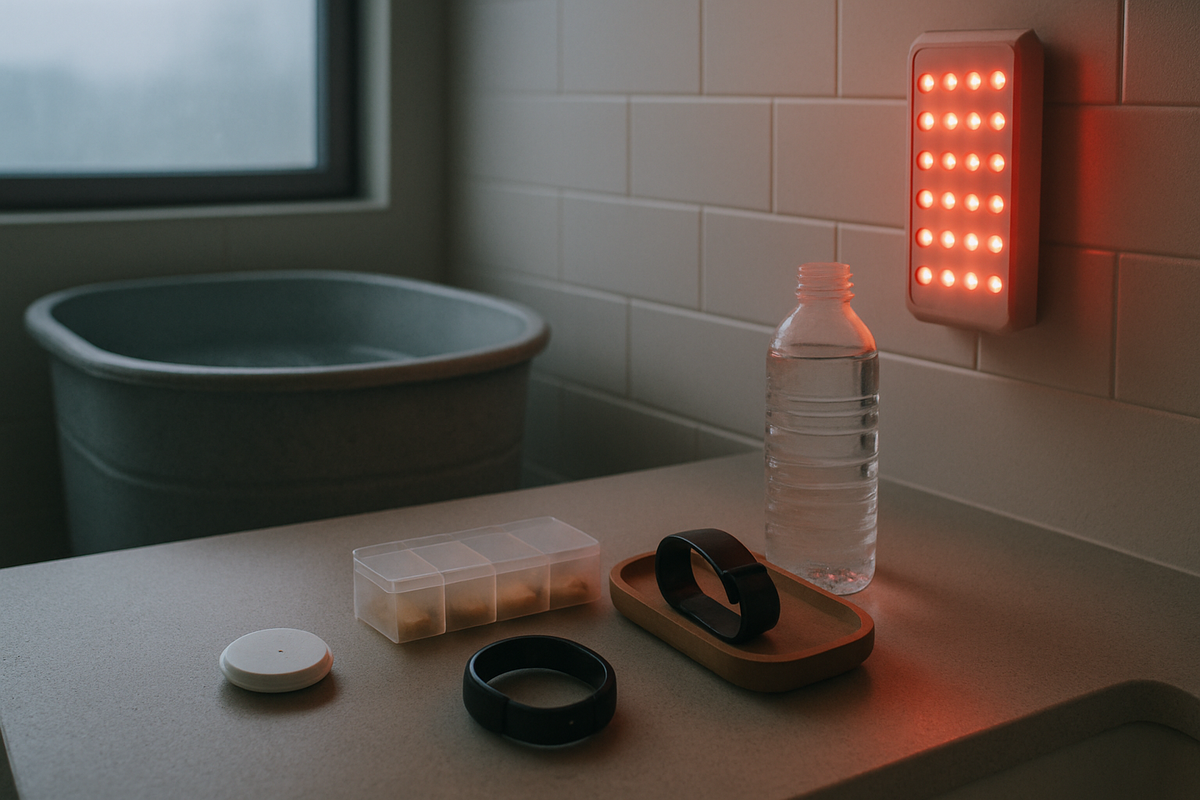
Recovery tools once confined to professional sports medicine clinics are now mainstream consumer products. The PEMF (pulsed electromagnetic field) therapy devices market was valued at $523.4 million in 2023 and is projected to reach $784.0 million by 2030. PEMF mats and wearables have transcended niche clinic tools to become biohacking essentials available for home use.
Sleep optimization has followed a similar trajectory. The global sleep tracking devices market was valued at $30.0 billion in 2024, showing sleep biohacking products have gone mainstream. Tailored fitness and nutrition plans are becoming more accessible through wearable tech advances, AI health coaching, and DNA testing, with technologies like easier-to-administer sublingual peptides, embedded infrared technology in textiles, and AI-driven health plans proliferating across consumer platforms.
Nutrition Shifts: Polyphenols, Bioharmony, and the Longevity Plate
Nutrition in the longevity space has moved beyond macronutrient optimization to focus on bioactive compounds and meal timing. Polyphenol-rich foods, including wild berries, leafy greens, high-phenolic olive oil, and deeply pigmented vegetables, now occupy the center of the longevity plate rather than the periphery. These plant compounds are associated with reduced inflammation, improved cardiovascular health, and neuroprotective effects.
Bioharmony nutrition means eating in alignment with circadian rhythms, metabolic needs, and digestive patterns rather than following prescriptive diets. This approach integrates time-restricted eating, which has moved from biohacking niche to mainstream recommendation, with personalized insights from wearable glucose monitors and AI health platforms that provide real-time feedback on how individual foods affect energy, sleep, and recovery.
Who Is Actually Doing This: Demographics of the Biohacking Consumer in 2026
The biohacking consumer base has diversified significantly. Women now represent approximately 45% of biohacking consumers, up from 20-25% in the early 2010s, driven by growth of female-focused health tech companies and mainstreaming of wearable tracking. Millennials and Gen Z drive over 41% of annual biohacking spending, bringing different motivations than older cohorts, including mental health optimization, stress management, and preventive health rather than only performance enhancement.
High-performance professionals, including executives, physicians, and competitive athletes, represent a disproportionately high share of biohacking spending, reflecting both financial ability and practical motivation for marginal performance improvements. But the democratization of wearable technology and recovery tools means longevity habits are no longer confined to the wealthy. Everyday consumers are integrating evidence-based protocols into routines, from cold showers and time-restricted eating to wearable sleep optimization and polyphenol-rich meal planning.
What This Means for Readers
Editorial analysis — not reported fact:
The maturation of longevity culture in 2026 offers everyday consumers practical entry points that didn't exist five years ago. You don't need a $15,000 hyperbaric chamber or concierge physician to benefit from evidence-based health optimization. A $100 Fitbit or used Apple Watch provides sleep staging, heart rate variability, and activity tracking that inform daily decisions. Cold showers cost nothing. A 16/8 eating window requires no special foods or supplements. High-phenolic olive oil and frozen berries are available at standard grocery stores.
The key shift is moving from aspirational to actionable. If you're a busy professional struggling with sleep quality, a wearable with sleep staging data can identify patterns, and a consistent 16/8 eating window may improve sleep onset. If you're an active adult managing training recovery, 11 minutes of cold exposure per week and polyphenol-rich post-workout meals represent low-cost, evidence-backed interventions. If you're managing stress, sauna sessions combined with wearable HRV tracking can provide tangible feedback on nervous system recovery.
Approach new protocols gradually, prioritize safety, and consult healthcare providers before beginning contrast therapy, extended fasting, or supplementation. The longevity movement's greatest contribution in 2026 isn't the technology itself, it's the normalization of treating health optimization as an ongoing, evidence-informed practice rather than reactive crisis management.
Sources & Further Reading
- Business Research Insights: Biohacking Market Report — Market size, growth projections, and U.S. market estimates for 2026
- Pew Research Center: Mobile Fact Sheet — Wearable device ownership trends from 2015 to present
- Apple Watch Series 9 — Product specifications and health tracking features
- Fitbit Charge 6 — Affordable wearable with advanced sleep and biometric tracking
- Garmin Venu 3 — Advanced wearable for active users with VO2 max and stress tracking
- Oura Ring — Discreet wearable alternative for sleep and recovery tracking
- Nature Scientific Reports: Cold Exposure and Sleep Quality — Research on cold plunge impacts on sleep onset and quality
- Huberman Lab — Research-backed protocols for cold exposure and metabolic benefits
- Grand View Research: PEMF Therapy Devices Market — Market valuation and growth projections for recovery technology
Editorial coverage of publicly reported health, fitness, wellness, nutrition, and active living developments. Move Weekly has no commercial relationship with any companies, gyms, studios, brands, events, experts, products, or organizations named.