Movement Without Pressure: Building Family Activity Habits
10 million U.S. children are completely sedentary. In 2026, parents are shifting to low-pressure, joy-based movement that works—and research validates it.
Key Takeaways
- 10 million American children are completely sedentary, participating in no tracked physical activity in the past year, and 90% do not meet CDC guidelines for movement.
- Parental modeling outweighs nagging—children whose parents visibly engage in walking, stretching, outdoor play, and active transport are more likely to stay active long-term than those whose parents simply encourage exercise verbally.
- Pressure backfires—forcing or nagging children to exercise creates negative associations with movement, while low-pressure, joy-based activities like tag, biking, and nature exploration build sustainable habits.
- Weekend outdoor time matters most—two days without weekday rush give families a realistic window to hike, explore water, or play outside, building the shared experiences children remember.
- Screen time balance, not elimination—37.7% of U.S. children spend more than seven hours per weekday on screens, and high screen time correlates with lower physical activity; establishing tech-free family rhythms supports movement without conflict.
Why Pressure-Free Movement Is the 2026 Family Wellness Shift
The challenge facing American families this year is not simply that children sit too much. According to PHIT America's research on the inactivity pandemic, 10 million American children are completely sedentary, meaning they have not participated in any of the 105 tracked activities even once in the past year. Ninety percent of U.S. children are not meeting CDC physical activity standards, and only 7% of children and youth aged 6-19 participate in at least 60 minutes of moderate- to vigorous-intensity physical activity per day.
But the deeper issue is psychological: millions of children have never built the identity, skills, or internal motivation that make activity feel natural. In response, parents across the U.S. are shifting from perfectionistic fitness culture toward low-pressure, joy-based movement that fits real family life. This summer, parents are increasingly prioritizing walks after dinner, beach days, backyard dinners, family bike rides, outdoor movie nights, gardening, and neighborhood play time.
Why Nagging and Forcing Activity Backfires
Traditional approaches to getting kids moving—nagging, forcing, and high-pressure structures—create negative associations with movement. Research shows that children who are pressured to be active often begin to associate movement with negative feelings, making them less likely to stay active in the future. Lasting habits rarely come from external control.
According to long-term research published in August 2026, emotional control—even when well-intentioned—can quietly undermine a child's sense of independence, a pattern called psychological control. This leads to lower autonomy and a cycle of dependence and anxiety. When movement becomes a battleground, children disengage rather than develop sustainable habits.
Parental Modeling Matters More Than Words
What parents do matters far more than what they say. Kids whose moms encourage them to exercise and eat well, and model those healthy behaviors themselves, are more likely to be active and healthy eaters. Research consistently shows that parental role modeling influences children's physical activity behavior in a sustainable manner from childhood to young adulthood, with physical activity interventions for parents offering potential for transgenerational benefits.
When children see their parents engage in sport, outdoor activities, and walking or cycling for transport, they form positive associations with these activities. They may be inspired through observation of their parents' active lifestyles or through participation in active recreation with their parents. When children see adults moving their bodies with intention—whether it's walking the dog, stretching, or dancing in the kitchen—they internalize the idea that movement is normal, joyful, and valuable.
Age-Specific Movement Needs Beyond Structured Exercise
Children do not train like adults. A six-year-old needs opportunities to sprint, stop, hop, throw, and hang, while a teenager may be ready for more structured sport, lifting, or conditioning but still benefits from simple family activity that is low-pressure and repeatable.
The data on accumulated activity and the practical success of short movement bouts during the day point in a different direction than traditional structured exercise: small chunks throughout the day are often how busy households actually hit physical activity targets. This approach removes the pressure of finding large blocks of time and makes movement feel more accessible.
Practical Low-Pressure Strategies That Work in Real Households
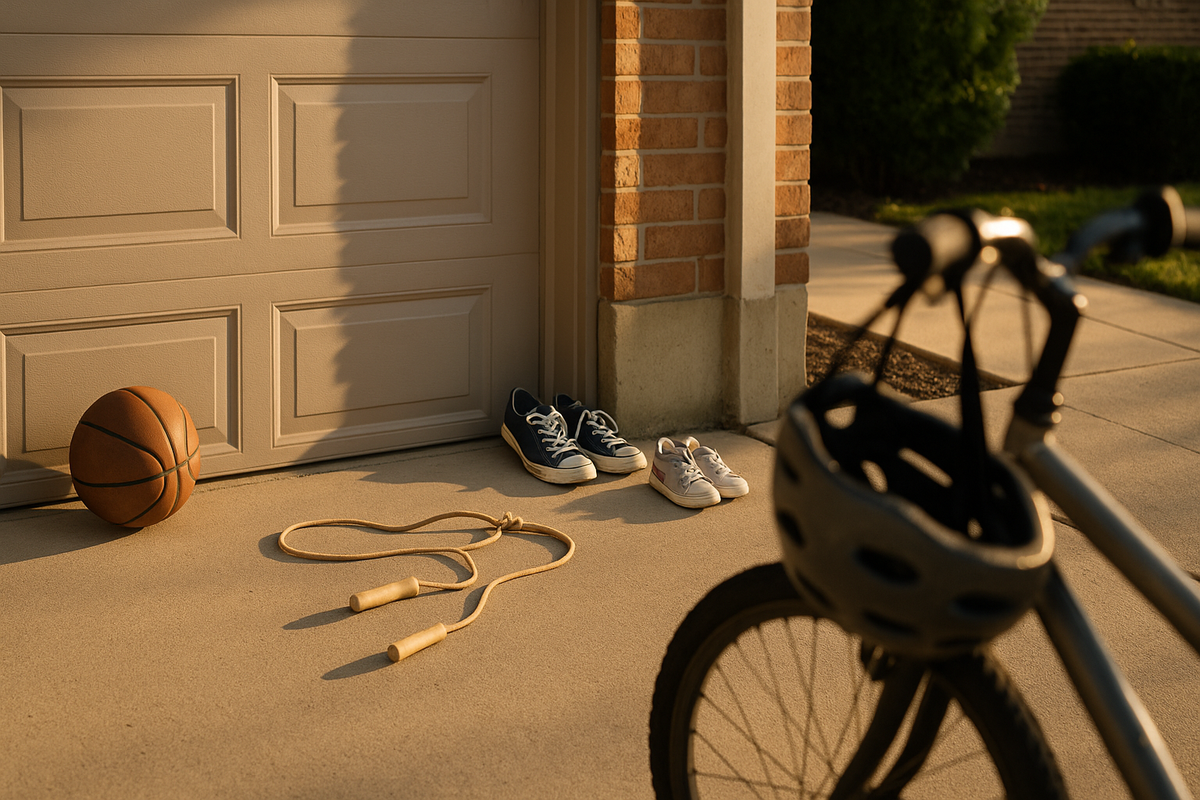
The most effective way to encourage kids to be active is to make movement fun. Children naturally enjoy play, and when activity feels like a game rather than a task, they are more likely to participate willingly. Activities like playing tag, riding bikes, dancing in the living room, building obstacle courses, or exploring nature can all support movement. If your child enjoys what they are doing, they will want to do it again.
Setting a few tech-free family rhythms can create space for movement without conflict. Practical strategies include deciding where your phone goes when you walk in the door, making the first few minutes after school phone-free, and building in analog rituals such as board games on weekends, walks, or cooking together.
Why Weekends Offer the Biggest Window for Family Movement
Weekends matter because two days without the weekday rush give families a real window to move together outdoors, and weekend family outdoor fitness builds habits, strengthens bodies, and creates the kind of shared experiences that children remember. Outdoor recreation participation is at record highs in the U.S., with 175.8 million Americans—57.3% of the population aged 6 and older—engaged in outdoor recreation in 2023.
Hiking is one of the most complete forms of family outdoor exercise because it works the legs, core, and cardiovascular system simultaneously. The uneven terrain and elevation changes add a balance and stability challenge that flat-ground walking does not provide. Public access to water is free in most places, and children reliably find water more interesting than anything designed to entertain them—a river with smooth rocks, a lake with a sandy edge, or a beach with tidal pools provides hours of unprompted activity.
Balancing Screen Time and Movement Without Conflict
Screen time should not be regarded solely as harmful, but balance is essential. A significant proportion of children—37.7%—spent more than seven hours per weekday on screens, and high screen time is associated with lower physical activity levels. Among children who exceeded seven hours of screen time, 68.8% did not participate in any physical activity.
The key may be balancing physical activity with screen activities that encourage learning, creativity, and active thinking. Screen-free vacations, where families intentionally unplug from devices and focus on shared experiences, is a growing trend in 2026. For young children especially, real-world experiences, relationships, and unstructured play should always come first.
What This Means for Readers
Editorial analysis—not reported fact:
If your household struggles with getting kids to move, the 2026 research suggests the problem may not be your child's motivation but the approach itself. Pressure, nagging, and forced exercise create resistance. What works instead is modeling movement yourself—taking walks after dinner, stretching visibly, biking to errands—and creating low-pressure opportunities for play and exploration.
Weekends offer the most realistic window. A Saturday morning hike, a Sunday trip to a lake or beach, or an hour of unstructured backyard play can accomplish more than a week of verbal encouragement. The goal is not perfection or meeting rigid exercise targets but building positive associations with movement that last into adulthood.
For busy families, small chunks of activity throughout the day—a 10-minute walk before breakfast, a quick game of tag after school, dancing while making dinner—add up. Establishing one or two tech-free family rhythms, such as phones in a basket during meals or no screens for the first 20 minutes after school, can create natural space for movement without turning it into a battle.
The shift happening in 2026 is away from treating physical activity as a box to check and toward making it a normal, joyful part of family life. If you move, your children are more likely to move. If movement feels fun and optional rather than forced, they are more likely to keep doing it when you are not watching.
Sources & Further Reading
- PHIT America: Why Kids Aren't Just Inactive—They're Psychologically Disengaged from Movement—Research on the 10 million completely sedentary American children and the deeper crisis of motivation
- The Hood Magazine: How Can I Encourage My Kids to Be Active Without Nagging or Forcing It?—Evidence on why pressure backfires and joy-based strategies that work
- ScienceDaily: Emotional Control and Psychological Autonomy in Children (August 2026)—Long-term research on psychological control and child independence
- Balance by Julie: Health & Well News—2026 family wellness trends including outdoor movement and tech-free time
- Fitness Warrior Nation: Family Fitness Activities—Weekend outdoor activity ideas and participation data
- The Everymom: Parenting Trends—Practical tech-free family rhythms and low-pressure parenting strategies
Editorial coverage of publicly reported health, fitness, wellness, nutrition, and active living developments. Move Weekly has no commercial relationship with any companies, gyms, studios, brands, events, experts, products, or organizations named.