How City Neighborhoods Became Wellness Destinations in 2026
From Dallas to Boston, neighborhood fitness ecosystems now offer run clubs, boutique studios, and holistic wellness hubs within walking distance, transforming how Americans connect through movement.
Key Takeaways
- Neighborhood wellness infrastructure has evolved from niche amenity to essential community design, with cities like Dallas transforming into boutique fitness destinations rivaling New York and Los Angeles through dense studio networks in every neighborhood.
- Social connection drives participation: Washington, D.C. leads U.S. cities with 36% of residents exercising five or more days weekly and 78% working out specifically to support mental wellbeing, according to a 2026 Mindbody survey of 2,557 adults across 25 major cities.
- Run clubs and group fitness have seen 59% growth in participation as consumers shift from solo home workouts to community-driven experiences, with platforms like Sweatpals now serving over 2 million active users across 24 markets hosting 20,000 monthly events.
- Wellness studios are expanding services beyond workouts to include red-light therapy, contrast therapy, massage, facials, and acupuncture, keeping members engaged longer and offering holistic self-care under one roof.
- Franchise accessibility is bringing boutique fitness to more neighborhoods nationwide, with brands like Pure Barre expanding to over 600 studios across North America and D1 Training growing to 90 locations since 2015.
- Phoenix leads in interpersonal connection, with 41% of residents reporting strong personal relationships and 72% connecting with loved ones to support mental wellbeing, highlighting how local wellness scenes foster both fitness and friendship.
Why Neighborhood Wellness Scenes Are Redefining American Fitness
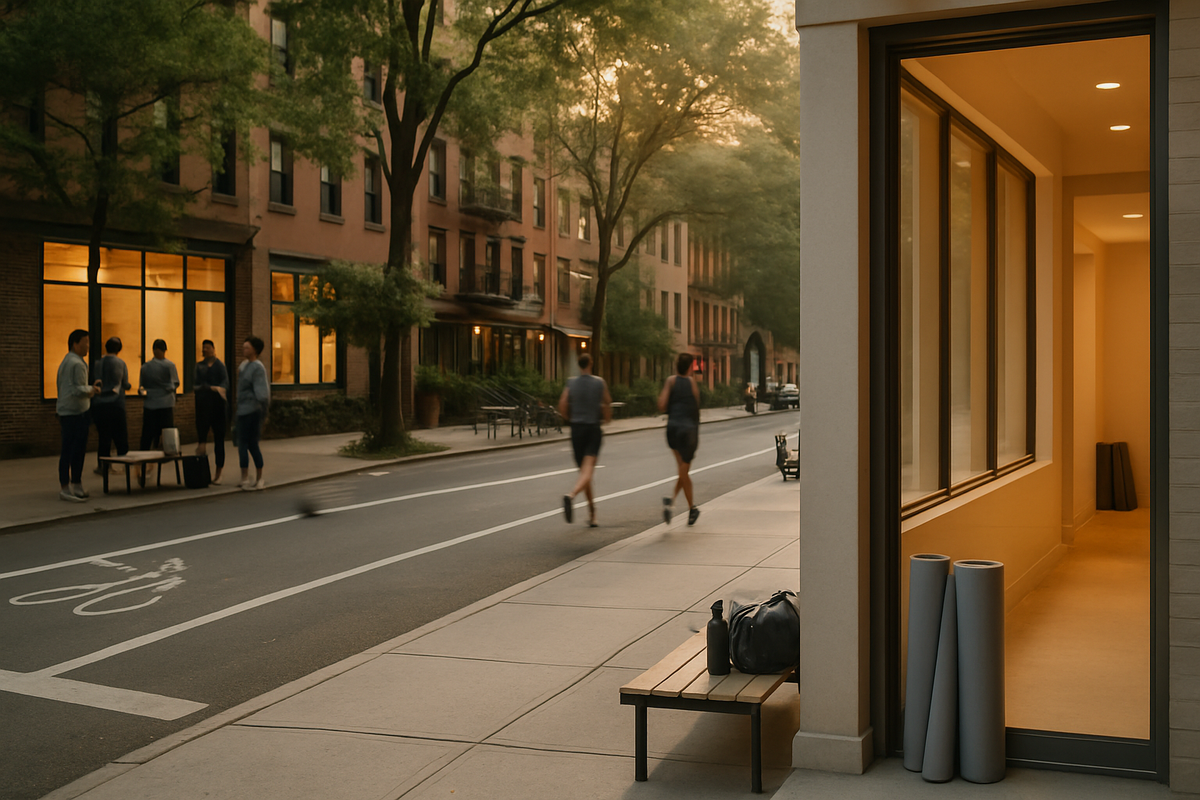
In 2026, city neighborhoods across the United States have transformed into wellness destinations where fitness, social connection, and community belonging intersect. What began as scattered boutique studios has evolved into dense, neighborhood-specific wellness ecosystems offering everything from Pilates and strength training to recovery services and run clubs within a few blocks.
This shift reflects a fundamental change in how Americans approach fitness and wellbeing. According to a 2026 Mindbody survey of 2,557 adults ages 18-65 across the 25 most populous U.S. cities, the healthiest cities share a common thread: robust local wellness infrastructure that supports both physical activity and social connection. Gen Z and millennials, facing what researchers have termed a loneliness epidemic, are driving demand for real-life community experiences centered on wellness rather than generic gym memberships or isolated home workouts.
Which U.S. Cities Lead the Neighborhood Wellness Movement
Washington, D.C. emerged as one of the most active cities in the nation, with 36% of residents exercising five or more days per week and only 5% skipping exercise entirely. Notably, 78% of D.C. residents exercise specifically to support mental wellbeing, the highest rate of any city surveyed.
Los Angeles ranks third nationally with an impressive balance of movement and nutrition, leading all cities in daily exercise frequency. Twenty-one percent of LA residents work out seven days weekly, and 31% eat three or more servings of fruits and vegetables daily. The city's neighborhood wellness density is evident in Santa Monica, which boasts 56 yoga and Pilates studios per million residents, along with 88 gyms and 107 spas and wellness centers per 100,000 people.
Phoenix stands out for interpersonal connection, with 41% of residents reporting strong personal relationships and 72% connecting with loved ones specifically to support mental wellbeing. Scottsdale ranks first in physical fitness, while Austin ties for having the most dietitians and nutritionists per capita, reflecting the city's emphasis on balanced living with high numbers of fitness facilities and outdoor exercise options like biking along Lady Bird Lake.
How Dallas and Boston Built Thriving Neighborhood Fitness Ecosystems
Dallas has transformed from having scattered spin studios into one of the strongest boutique fitness scenes in the country, saturating almost every neighborhood with local studios. Community anchors like Beyond have helped produce talented wellness entrepreneurs while maintaining loyal neighborhood clienteles. Studio 6 pioneered the Lagree method in Dallas and expanded to multiple neighborhoods including Preston Hollow, Lakewood, Uptown, and Plano, creating accessible fitness options across the metro area.
Boston's South End has developed one of the city's most well-rounded fitness scenes, offering strength and conditioning, Pilates, yoga, cycling, and recovery within a few blocks. The neighborhood model supports every style of movement, allowing residents to walk to different modalities throughout the week. Similarly, New York's NoMad and Flatiron districts have become top destinations for boutique fitness experiences and luxurious spa treatments. Raleigh, ranked as one of the fittest cities in the country, supports its active population through 16 local studios contributing to a strong neighborhood fitness community.
Run Clubs and Social Fitness Platforms Drive Community Connection
Group fitness has evolved beyond scheduled classes into vibrant social scenes. Sweatpals, a social fitness and wellness platform for discovering local classes, run clubs, and wellness events, serves over 2 million active users across 24 markets with 20,000 events hosted monthly. The platform announced a $12 million funding round in October 2025, reflecting investor confidence in community-driven fitness.
Run club participation has grown by 59%, according to industry tracking, as consumers seek structured communities through events, challenges, and group experiences. Studios offering these social elements are seeing higher retention and lower acquisition costs than those selling access alone. In 2026, the most impactful wellness entrepreneurs are building circles and safe spaces where people feel seen and supported, recognizing that wellness is as much about connection as transformation.
Franchise Expansion Brings Boutique Wellness to More Neighborhoods
Pure Barre, founded in 2001, has expanded to more than 600 studios across North America, offering a scalable business model with semi-absentee ownership options. The franchise attracts entrepreneurs seeking a community-focused fitness brand they can bring to underserved neighborhoods.
D1 Training has grown to 90 locations since franchising in 2015, focusing on specialized scholastic athlete training alongside adult fitness. The brand seeks franchisees passionate about sports and community fitness, helping athletes reach their potential at the neighborhood level. Since 2022, Extraordinary Brands has created a family of fitness franchises aiming to develop brands that embrace all shapes, sizes, and genders while making health and wellness more accessible, with franchisees bringing these concepts to communities across the United States.
Studios Expand Beyond Workouts Into Holistic Wellness Hubs
In 2026, fitness businesses are offering comprehensive self-care services under one roof. Neighborhood studios now provide red-light therapy, massages, facials, waxing, contrast therapy, compression boots, acupuncture, and even lash lifts alongside traditional workouts. This holistic approach keeps clients engaged well beyond the 45-minute class, transforming studios into wellness destinations where members can address multiple aspects of self-care in a single visit.
Community fitness events organized by local governments, schools, and nonprofits have become a powerful force in spring and summer 2026. Free or low-cost group walks, marathons, yoga sessions in parks, and obstacle challenges turn exercise into community celebration rather than a solitary task. Research confirms that group-based physical activity improves consistency and mental wellbeing while reducing isolation.
Social Infrastructure Design Supports Neighborhood Wellness
Master-planned communities are incorporating social infrastructure like front-porch architecture and third places designed for lingering, with research confirming that well-maintained social infrastructure measurably reduces loneliness. People with access to social infrastructure are three times more likely (32% versus 9%) to have close friends.
Developers now recognize that social connection is not a soft amenity but a design decision with measurable impacts on resident satisfaction, tenant retention, and community health. Gen Z and millennials are driving demand for spaces that foster belonging, not just shelter, and neighborhoods that integrate wellness infrastructure into their design are attracting and retaining residents more effectively.
What This Means for Readers
Editorial analysis — not reported fact:
If you've felt disconnected from your fitness routine or struggled to stay consistent with home workouts, the neighborhood wellness movement offers a practical alternative. Look for studios, run clubs, or group classes within walking distance of your home or workplace. The barrier to entry is often lower than you think: many run clubs are free, community events cost nothing, and intro packages at boutique studios typically range from $30 to $50 for unlimited classes during your first week.
For busy professionals and parents, neighborhood density matters. Having multiple wellness options within a few blocks means you can strength train on Monday, attend yoga on Wednesday, and join a Saturday morning run club without spending time in transit. Studios offering expanded services like massage, red-light therapy, or contrast therapy let you stack self-care into one outing rather than coordinating multiple appointments across town.
If you're new to a city or looking to expand your social circle, wellness-centered communities provide structured opportunities to meet neighbors with shared interests. Showing up consistently to the same Tuesday evening Pilates class or Thursday run club creates familiarity and friendship in a way that's harder to replicate through apps or one-off events. The data on mental wellbeing and social connection suggests these aren't frivolous luxuries but infrastructure that supports both physical and emotional health.
Sources & Further Reading
- Mindbody 2026 survey of wellness habits across 25 U.S. cities — exercise frequency, mental wellbeing, nutrition, and social connection data for Washington D.C., Los Angeles, Phoenix, and other major metros
- Sweatpals social fitness platform — community-driven fitness app with 2 million users, 24 markets, and $12M October 2025 funding round
- Dallas boutique fitness scene — neighborhood studio growth and wellness entrepreneur ecosystem
- Studio 6 Lagree method expansion — multi-neighborhood Pilates studio growth in Dallas metro
- Boston South End fitness community — neighborhood-level wellness infrastructure
- Santa Monica wellness density data — studios, gyms, and spas per capita
- Pure Barre franchise expansion — 600+ studios across North America
- D1 Training franchise growth — 90 locations since 2015 franchising launch
- Extraordinary Brands fitness franchise family — accessibility-focused wellness brands launched since 2022
- Social infrastructure research and community design — impact of built environment on loneliness and friendship formation
Editorial coverage of publicly reported health, fitness, wellness, nutrition, and active living developments. Move Weekly has no commercial relationship with any companies, gyms, studios, brands, events, experts, products, or organizations named.