Travel Wellness: Staying Fit on the Road in 2026
78% of Americans plan summer vacations in 2026. Here's how to maintain workouts, beat jet lag, and eat well at airports without a wellness retreat budget.
Key Takeaways
- Hotel gym equipment limitations are real in 2026, but even 15-20 minutes of movement using basic dumbbells, a treadmill, or just your bodyweight is better than skipping exercise entirely while traveling.
- Fitness apps like Fitbod and Nike Training Club adapt workouts to available hotel gym equipment in real time, generating plans whether you have a full gym setup or just a yoga mat in your room.
- Jet lag recovery follows a rule of one day per time zone crossed, with timed light exposure (morning light for eastward travel, evening light for westward) being the most powerful intervention, and low-dose melatonin (0.5 mg) as effective as higher doses.
- TSA rules allow solid foods like nuts, protein bars, jerky, and fresh fruit through security, while liquids and gels including yogurt and nut butter must be 3.4 ounces or less, making pack-ahead snacks the best strategy to avoid airport inflation and maintain nutrition.
- Eating on your destination schedule 24 hours before arrival helps synchronize your body's internal clocks even before light exposure shifts circadian rhythm, with breakfast timing key for eastward travel and dinner timing for westward.
- 78% of Americans plan summer vacations in 2026, with fitness amenities now driving booking decisions for 60% of Gen Z travelers who view hotel gyms as core travel experiences, not optional extras.
Why Travel Wellness Matters More Than Ever in 2026
Summer 2026 sees 78% of Americans planning vacations, but wellness-focused travelers face a tension: only 45% are booking paid lodging, the lowest rate in six years, according to American Express Travel trend data. Budget constraints haven't dimmed wellness ambitions. Instead, modern travelers refuse to pause their fitness routines, seeking destinations where they can continue training, recover properly, and maintain healthy habits without retreat-level budgets.
The shift is generational and decisive. Fitness amenities drive booking decisions for 60% of Gen Z travelers, who view hotel gyms as core experiences rather than checkbox amenities. Travelers in 2026 expect hotel fitness spaces to be seamless extensions of their daily wellness routines, not cramped basement corners with aging equipment.
Making Hotel Gyms Work: Equipment Realities and Smart Strategies
Most hotel gyms stock basic equipment: dumbbells ranging from 10 to 50 pounds, at least one treadmill or cardio machine, and an adjustable bench. While hotel fitness centers have improved dramatically over the past decade, limitations remain real, and travelers need practical strategies that work within those constraints.
The foundational principle, according to fitness professionals: the best workout is the one you actually do, with even 15 to 20 minutes of movement better than skipping exercise entirely. This means adapting your program to available equipment rather than abandoning it. Simple circuits using dumbbells for upper body work, bodyweight movements like pushups and squats, and short cardio bursts on the treadmill deliver results when consistency is the priority.
Fitness Apps That Adapt to Your Travel Setup
Your smartphone might be your biggest travel fitness ally in 2026. Intelligent fitness apps remove guesswork from training on the road, generating workouts based on what you actually have access to, whether that's just your body, a set of resistance bands, or a basic hotel gym.
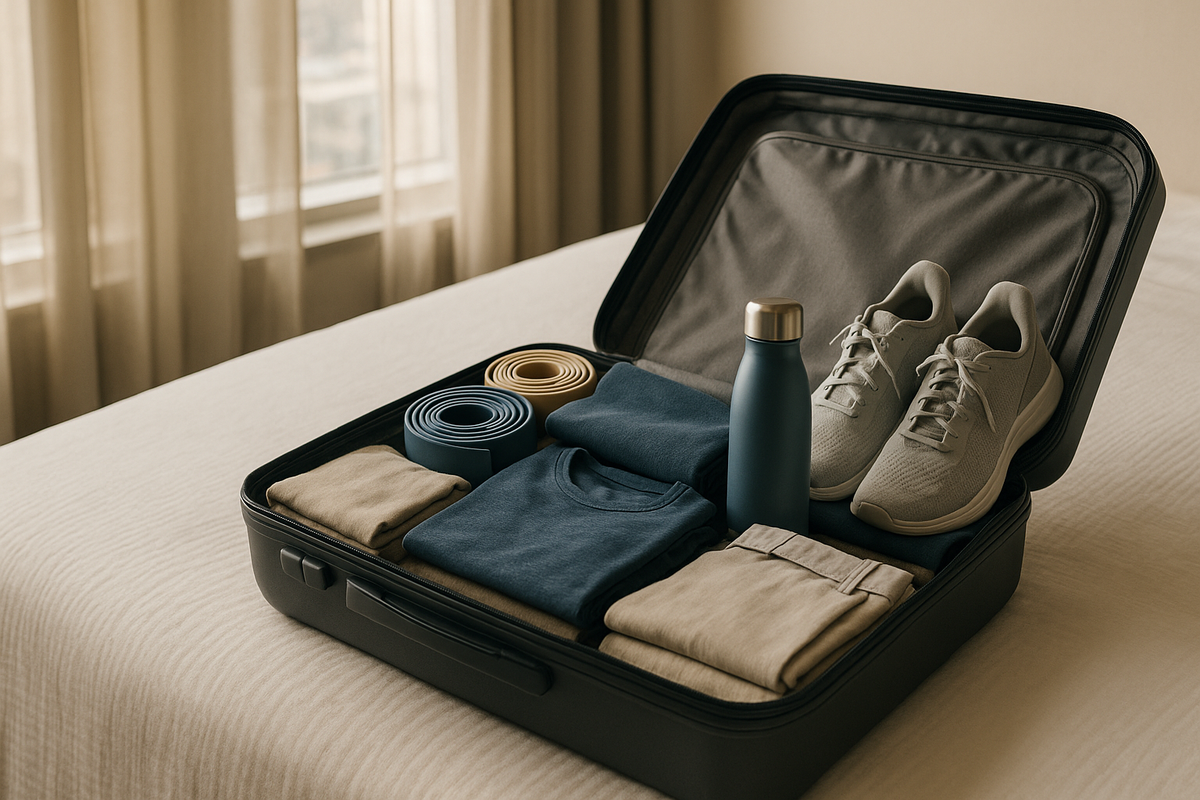
Fitbod stands out as an exceptional travel companion, building workouts from scratch based on available equipment and adjusting in real time if machines are broken or occupied. You can modify your equipment list during your session, meaning you're never stuck waiting or unable to complete your workout. The Nike Training Club app offers a wide range of workouts from 15-minute bodyweight sessions perfect for a hotel room to full 45-minute strength programs, and it's completely free. For travelers dealing with the physical toll of long flights, Pvolve's virtual studio focuses on low-impact, equipment-light workouts emphasizing alignment and mobility, requiring just a yoga mat.
Jet Lag Recovery: What the Science Says Works
Jet lag recovery follows a general rule of one day per time zone crossed, but eastward travel takes longer because advancing your body clock is harder than delaying it. The most powerful intervention isn't a pill or supplement but strategic light exposure.
Seek morning light for eastward travel and evening light for westward travel at your destination, according to Harvard Health guidance. Natural daylight exposure helps reset your circadian rhythm faster than any other single strategy. Pre-adapting your sleep schedule by one hour per day for three days before travel significantly reduces jet lag severity, a proactive approach that works especially well for business travelers with advance notice.
Melatonin Timing and Dosing
Low-dose melatonin at 0.5 mg is as effective as higher 5 mg doses for circadian phase-shifting, with fewer side effects, according to Sleep Foundation research. Timing matters more than dose: take melatonin in the early evening at your destination for eastward travel, and in the second half of the night for westward travel.
Eating on your destination schedule can accelerate adjustment. Eating on the destination schedule for 24 hours before arrival helps synchronize peripheral clocks even before light exposure shifts your central body clock. Eat breakfast earlier than usual for eastward travel and dinner later for westward journeys. Making time for movement can reduce travel-related stress and minimize muscle stiffness after long plane, train, or car rides, and may help regulate circadian rhythm and counteract jet lag.
Airport and Travel Nutrition: What Works Within TSA Rules
Solid foods like nuts, protein bars, jerky, and crackers are allowed through TSA security, while liquids and gels including yogurt, hummus, and nut butters must be 3.4 ounces or less or purchased after security. Understanding these rules lets you pack strategically and avoid both airport inflation and nutrition gaps.
Registered dietitians recommend packing three essential components for any snack: fiber, fat, and protein, bringing along easy-to-pack fruits such as apples, oranges, or bananas. Hard-boiled eggs (in their shells), homemade fruit and nut bars, fresh vegetables with single-serve hummus containers purchased post-security, energy bars with at least 5 grams of protein, and homemade granola all make excellent travel snacks.
Eating Strategies for Long Travel Days
The best strategy to eat healthy at the airport is packing your own snacks and meals in your carry-on, so you aren't beholden to terminal options and you save money, according to nutrition professionals. Airport inflation is real, and preparation prevents the cycle of becoming overly hungry and making rushed choices.
Eating every three to five hours while you're awake helps keep you satisfied and prevents blood sugar crashes, especially important when traveling through time zones that disrupt typical meal timing. Balanced snacking maintains stable energy levels during long layovers and delays. The goal is to find snacks and meals made with whole, nutritious foods that have a good amount of protein, fiber, healthy fats, and complex carbohydrates to help keep you full.
Understanding Travel's Physical Toll
Airplane cabins have cool, dry, low-pressure air causing dehydration and susceptibility to respiratory problems, according to medical guidance from WebMD. Air pressure changes lead to bloating, and long-term sitting causes leg swelling. These aren't minor inconveniences but real physiological challenges that compound when you're trying to maintain fitness and wellness routines.
Movement during travel isn't optional for active individuals. Making time for movement can reduce travel-related stress and minimize muscle stiffness that crops up after a long plane, train, or car ride. Simple strategies include walking the terminal during layovers, doing calf raises while waiting at the gate, and scheduling a short hotel gym session or walk immediately upon arrival rather than the next day.
What This Means for Readers
Editorial analysis — not reported fact:
If you're among the 78% planning summer travel in 2026, your wellness routine doesn't have to be the casualty of vacation. The convergence of better hotel fitness amenities, intelligent workout apps that adapt to any equipment setup, and research-backed jet lag strategies means maintaining movement, nutrition, and recovery away from home is more accessible than ever, no wellness retreat budget required.
Before your next trip, download a fitness app like Fitbod or Nike Training Club and familiarize yourself with its equipment-adaptation features. Pack a gallon-size bag with TSA-friendly protein-rich snacks: individual nut packs, protein bars with at least 5 grams of protein, and fresh fruit. If crossing more than two time zones, start shifting your sleep schedule by one hour per day three days before departure, and plan to seek bright light at strategic times once you arrive.
For business travelers with predictable schedules, these interventions become routine. For families and recreational travelers facing tighter budgets in 2026, the fifteen-minute hotel room bodyweight workout or pre-packed airport snacks represent small investments with outsized returns: you return home energized rather than depleted, your routine intact rather than derailed. The practical takeaway is specificity. Don't aim to "stay healthy while traveling." Instead, identify your hotel gym the day you arrive, set a 7 a.m. calendar reminder for a 20-minute session, pack three days of protein bars and fruit, and take a 15-minute walk in morning sunlight at your destination.
Travelers managing chronic conditions, taking medications affected by time zone changes, or considering melatonin supplementation should consult a healthcare professional for personalized guidance before departure.
Sources & Further Reading
- American Express Travel: 2026 Summer Travel Trends — consumer vacation planning data and wellness travel insights
- Hilton Five Feet to Fitness Research — how fitness amenities influence booking decisions, especially for Gen Z travelers
- Coach: Hotel Gym Workouts — typical hotel gym equipment and effective workout strategies
- Wirecutter: Best Fitness Apps — comprehensive review of Fitbod, Nike Training Club, Pvolve, and other apps for travel workouts
- Harvard Health: Jet Lag — circadian rhythm science, light exposure timing, and recovery strategies
- Sleep Foundation: Melatonin and Jet Lag — dosing guidance, timing recommendations, and pre-travel sleep schedule adjustments
- Health: Healthy Eating Tips for Air Travel — TSA rules for foods, nutrition strategies, and meal timing during travel
- EatingWell: Best Travel Snacks According to Dietitians — registered dietitian recommendations for fiber, fat, and protein balance
- WebMD: Why Does Flying Make You Feel Terrible — airplane cabin conditions, dehydration, and physiological impacts of air travel
- REI Expert Advice: Travel Fitness — movement strategies to reduce stress and muscle stiffness during trips
Editorial coverage of publicly reported health, fitness, wellness, nutrition, and active living developments. Move Weekly has no commercial relationship with any companies, gyms, studios, brands, events, experts, products, or organizations named.