Family Fitness: Screen-Free Movement & Mental Health in 2026
With kids logging 21 hours of weekly screen time and 41% of parents too stressed to function, family movement has become a mainstream solution for both crises.
Key Takeaways
- Screen time has doubled what parents want: Kids average 21 hours of screen time per week, more than twice the nine hours parents consider ideal, while only 24% of children meet the CDC recommendation of 60 minutes of daily physical activity.
- Parental stress is driving the shift: 41% of American parents report stress so severe they cannot function most days, according to the U.S. Surgeon General's 2024 "Parents Under Pressure" advisory, and 49% rely on screen time daily to manage parenting responsibilities.
- Family movement addresses both crises: Studies in the Journal of Family Psychology show parents who exercise with their children report higher relationship satisfaction and improved communication, while physically active youth have lower body fat, stronger bones, better cognition, and reduced depression symptoms.
- The cultural moment is here: Searches for "screen-free activities" are up 200% year over year in 2026, alongside "no phone summer" surging 340%, as school phone bans spread and parents embrace Jonathan Haidt's "play-based childhood" framework from The Anxious Generation.
- Simple daily habits work best: Family walks, parent-child workout games, weekend outdoor adventures, and bike rides to everyday errands require no special gear and build lifetime movement patterns without feeling like forced exercise.
Why Family Fitness Became a Mainstream Parenting Strategy in 2026
American families are in motion this year, and the shift is both cultural and urgent. Parents face a dual crisis: children glued to screens for 21 hours per week while caregivers report stress levels so high that 41% say they cannot function most days, per the U.S. Surgeon General's 2024 advisory. The solution gaining traction across households is deceptively simple: get moving together.
This isn't aspirational wellness content. It's a practical response to measurable problems. According to the CDC, only 24% of children ages 6 to 17 meet the recommended 60 minutes of daily physical activity, even as research links regular movement to improved cognition, reduced depression symptoms, stronger bones, and lower body fat in youth. At the same time, 54% of parents have felt their child is addicted to screens, and screens have quietly become a daily coping tool for overwhelmed caregivers.
Family movement addresses both ends of the equation. When parents and kids walk, play, bike, or hike together, they reduce screen dependence, manage stress, strengthen relationships, and model the habits that last a lifetime.
The Screen-Time Surge and the Search for Alternatives
The numbers tell the story. Kids are logging screen time at more than double what parents think is healthy, and the gap is driving action. Search interest in "screen-free activities" has jumped 200% year over year as of spring 2026, alongside surges in "no phone summer" (up 340%) and "family traditions ideas" (up 200%), according to consumer trend data. School phone bans rolled out across many states at the start of the 2025-2026 school year, amplifying a broader cultural conversation sparked by Jonathan Haidt's bestselling book, The Anxious Generation, which advocates for play-based childhoods.
The American Academy of Pediatrics now emphasizes quality and context over rigid time limits, noting that features like autoplay and endless scrolling displace sleep, physical activity, and family time. Parents are responding by shopping for movement-based gear, educational outdoor play, and activities that don't require Wi-Fi.
Movement is emerging as the most accessible alternative. Unlike organized sports or expensive memberships, walking, active play, and weekend outdoor adventures require no special equipment and fit into tight schedules.
How Parental Stress Shapes Children's Activity Levels
Parental mental health and child physical activity are more connected than many families realize. When a parent is stressed or anxious, children pick up on it, affecting their schoolwork, behavior, mood, relationships, and sleep. Nearly half of parents, 49%, rely on screen time every day to help manage parenting responsibilities, a pattern that reflects caregiver burnout more than parenting philosophy.
Research published in the Journal of Family Psychology shows that parents who exercise with their children report higher relationship satisfaction and improved communication. Kids mirror parental behavior, so modeling movement increases the likelihood they stay active into adulthood. Whether it's a structured family workout, a daily walk, or simply playing outside, shared movement releases endorphins, improves sleep, and helps children burn off excess energy and tension.
Time in nature specifically has been shown to reduce stress, improve focus, and promote calm in both children and adults. The developmental cost of sedentary, screen-heavy childhoods is starting to show up in the data, and parents are responding by prioritizing their own mental health as a foundation for their children's wellbeing. The oxygen mask analogy applies: caregivers must secure their own wellness before they can effectively support their kids.
Practical Family Movement Strategies That Work in 2026
Families are making movement work without overhauling their lives. The most successful strategies share three traits: they're simple, they're flexible, and they don't feel like exercise.
Daily Family Walks
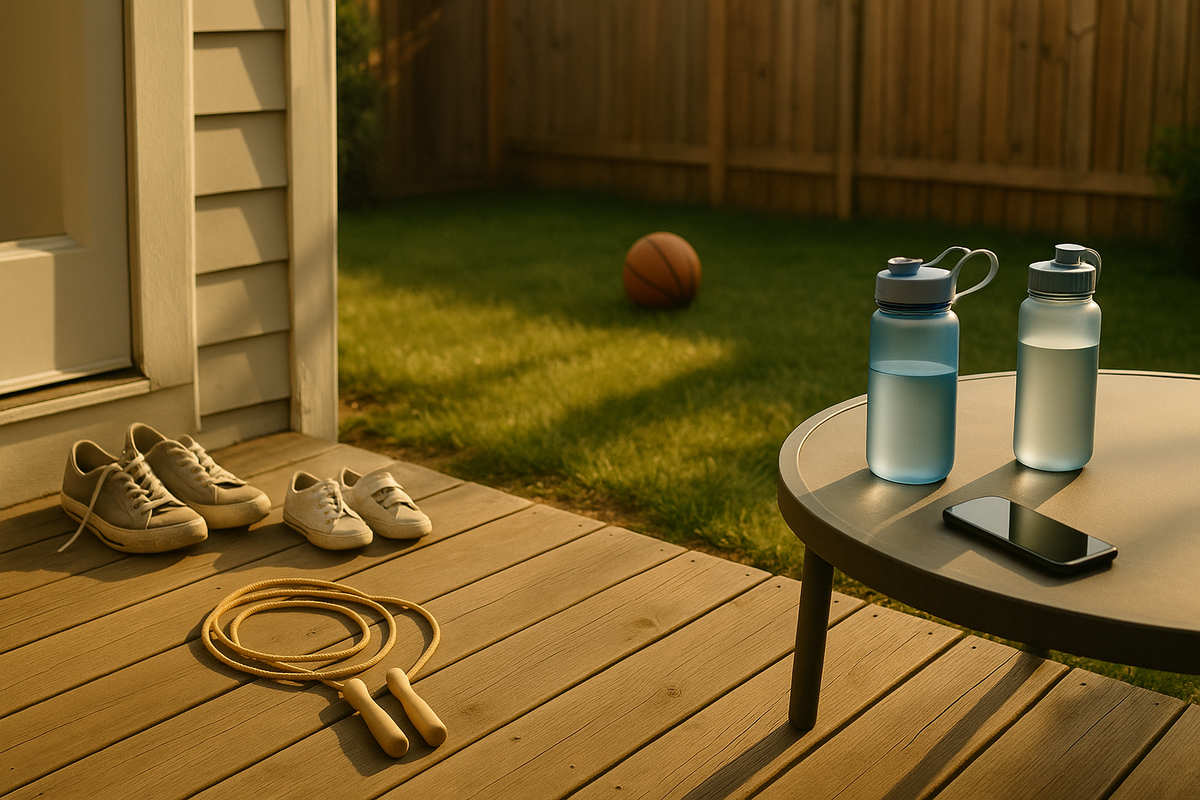
A 20- to 30-minute family walk before or after dinner improves physical health, mental wellbeing, and family bonds. Parents can switch it up with hiking for older children or bike rides to the library, grocery store, or park. The activity becomes a habit, not a chore, and it requires no gear beyond comfortable shoes.
Weekend Outdoor Adventures
Parents in 2026 are opting for intention over extravagance, choosing camping, road trips, and screen-free travel activities. Search interest in "educational activities for kids" is up 280%, and "outdoor learning" is gaining momentum. Weekend adventures don't need to be expensive or far from home; local parks, trails, and playgrounds offer enough novelty to keep kids engaged.
Parent-Child Workout Games
Family workouts should feel like games, skill practice, and shared time, not bootcamp. A simple structure works for all ages: warm-up, strength game, cardio game, cooldown. Squats, push-ups, lunges, and jumping jacks require no equipment, and parents can hold younger children while squatting to make it both fun and effective. Children are constantly moving and figuring out what their bodies can do; as long as parents don't force it, exercise becomes play.
The "Going Analog" Lifestyle
"Going analog" is emerging as a major 2026 lifestyle trend, with families embracing board games, puzzles, and analog tools to create boundaries and reduce overstimulation. Gen Z parents are conscious of letting their children experience boredom, a shift from Millennial parenting norms. Movement fits naturally into this framework: bike rides replace car trips, outdoor play replaces tablets, and weekend hikes replace streaming marathons.
The Evidence Base for Active Families
The CDC reports that children and adolescents need at least 60 minutes of physical activity daily, with most of that time spent in moderate-to-vigorous aerobic activity. Adequate physical activity plays a key role in cognitive, social-emotional, and physical development and lays the foundation for long-term health.
Compared to inactive peers, physically active youth have higher fitness levels, lower body fat, stronger bones and muscles, and improved brain health, including better cognition and reduced symptoms of depression. Regular childhood physical activity is also important for preventing risk factors for heart disease, obesity, and type 2 diabetes later in life.
The relational benefits are equally strong. Studies show that kids who see their parents prioritize movement are more likely to stay active as adults, and shared physical activity strengthens parent-child communication and relationship satisfaction.
What This Means for Readers
Editorial analysis — not reported fact:
If you're a parent feeling stretched thin, the message from spring 2026 is clear: you don't need a gym membership, a training plan, or expensive gear to raise an active family. You need a pair of shoes, a willingness to step outside, and permission to make movement feel like connection rather than obligation.
Start with a 20-minute family walk after dinner three nights a week. On weekends, swap one hour of screen time for a trip to a local park or trail. If your kids resist, frame it as exploration, not exercise. Let them lead the walk, pick the route, or set the pace. Make it a game: count birds, collect leaves, race to the next mailbox.
If you're managing high stress, remember that your wellbeing is your child's foundation. A 10-minute walk alone, a quick yoga session, or a bike ride to the store models self-care and movement in equal measure. Your kids are watching, and they'll mirror what they see far more than what you say.
For families with very young children, even five minutes of active play counts. Hold your toddler during squats, chase them around the yard, or turn cleanup time into a movement game. For families with teens, invite them to join your workout, go for a walk-and-talk, or simply ask what activity sounds fun this weekend.
The research is unambiguous: kids need 60 minutes of movement daily, and fewer than one in four are getting it. But this isn't a clinical problem requiring a clinical solution. It's a household rhythm problem, and rhythm is something every family can adjust, one walk at a time.
If movement feels hard to sustain, remember that the goal isn't perfection. It's consistency, connection, and showing your kids that bodies are built to move and that moving together feels good.
Sources & Further Reading
- CDC physical activity guidelines for children and adolescents — Recommendations, benefits, and current participation rates for youth ages 6 to 17
- U.S. Surgeon General's 2024 "Parents Under Pressure" advisory — National data on parental stress, mental health, and caregiver wellbeing
- American Academy of Pediatrics guidance on screen time and youth mental health — Updated recommendations emphasizing quality, context, and developmental impact of digital media
Editorial coverage of publicly reported health, fitness, wellness, nutrition, and active living developments. Move Weekly has no commercial relationship with any companies, gyms, studios, brands, events, experts, products, or organizations named.