Travel Wellness: Workouts, Nutrition & Jet Lag Recovery
How to stay active, eat well, and recover from jet lag in 2026. Hotel gym strategies, airport snack tips, and circadian rhythm science for travelers.
Key Takeaways
- Hotel fitness amenities now drive booking choices: 60% of Gen Z travelers and 42% of business travelers prioritize high-quality gym access when selecting hotels, with modern properties offering squat racks, Olympic bars, and Peloton bikes instead of outdated basement treadmills.
- Airport nutrition doesn't require compromise: Packing your own snacks with fiber, protein, and fat—such as hard-boiled eggs, nuts, hummus, and fresh fruit—saves money and helps maintain stable energy levels through travel days.
- Jet lag recovery takes roughly one day per time zone crossed: Symptoms stem from circadian rhythm disruption, affecting mood, concentration, and physical performance, especially for travelers crossing more than three time zones.
- Light exposure is the strongest jet lag countermeasure: For eastbound trips, seek morning sunlight and avoid evening brightness; for westbound travel, prioritize late-afternoon light to help reset your internal clock faster.
- Hotel gym workouts benefit from adaptability: Supersets, circuit training, and fitness apps that generate custom plans based on available equipment help travelers maintain strength and cardio routines with limited gear.
- Movement during travel reduces stress and stiffness: Exercise may help regulate circadian rhythm and counteract jet lag while minimizing muscle tightness from long flights or car rides, according to research.
Why Travel Wellness Became a Mainstream Priority in 2026
Travel wellness has shifted from niche luxury to everyday expectation. About 53 percent of Americans believe it is very or somewhat important to exercise while traveling, and 76% of global travelers now prioritize wellness amenities when choosing accommodations. This shift reflects a broader cultural change: fitness, nutrition, and sleep have become non-negotiable elements of daily life, even during business trips and vacations.
The convergence of wellness tourism growth, advanced wearable technology, and app-based fitness solutions means travelers have concrete tools to maintain health routines on the road. For everyday readers, this translates to practical questions: How do I find a hotel with a real gym? What snacks can I pack through TSA? How do I recover from jet lag faster?
How Hotel Gyms Transformed to Meet Traveler Expectations
Hotel gyms have improved dramatically over the last decade. Most properties now include basic equipment such as dumbbells ranging from 10 to 50 pounds, a treadmill or cardio machine, and an adjustable bench. However, the bar has risen considerably higher for properties targeting wellness-focused guests.
In 2026, guests no longer accept a cramped, windowless basement filled with a single aging treadmill and a set of rusted dumbbells. They expect a seamless extension of their daily wellness routine. Premium hotels are responding: The Westin London City delivers one of the rare hotel gyms that actually works for serious training, with squat racks, Olympic bars, and a full free-weights setup alongside Peloton bikes and Technogym equipment. The facility includes a 12-meter pool and full spa access, making it easy to shift from lifting to recovery without missing a beat.
42% of business travelers refuse to book a property that lacks a high-quality fitness facility, according to industry research. This booking behavior has pushed even mid-tier brands to upgrade their offerings, recognizing that fitness amenities directly impact occupancy rates and guest satisfaction scores.
Making the Most of Limited Hotel Gym Equipment
Not every property offers a premium fitness center, but travelers don't need perfect conditions to stay active. Adaptability is key in less than ideal gyms. Try supersets or circuit workouts to intensify your session, according to fitness professionals writing for SELF. For example, grab a pair of dumbbells and do a set of bicep curls, then move the dumbbells overhead for tricep extensions. Or take one dumbbell for goblet squats, then switch to a lighter pair for Romanian deadlifts.
Fitness apps help travelers stay consistent: tell the app what you have—just your body, a set of bands, or a basic hotel gym—and it instantly generates a plan with the right mix of strength and cardio exercises for your specific space. Making time for movement is still a smart idea: it can reduce travel-related stress and minimize muscle stiffness that crops up after a long plane, train, or car ride. It may even help regulate your circadian rhythm and counteract jet lag, according to research.
Navigating Airport Food and Packing Smart Snacks
Amid the slew of fast-food chains, display cases full of sugar- and sodium-laden goodies, and wildly overpriced packaged snacks, it can be difficult to prioritize nutrition or your wallet. The best strategy, according to registered dietitians, is packing your own snacks and meals in your carry-on. This approach sidesteps limited terminal options and avoids airport price inflation.
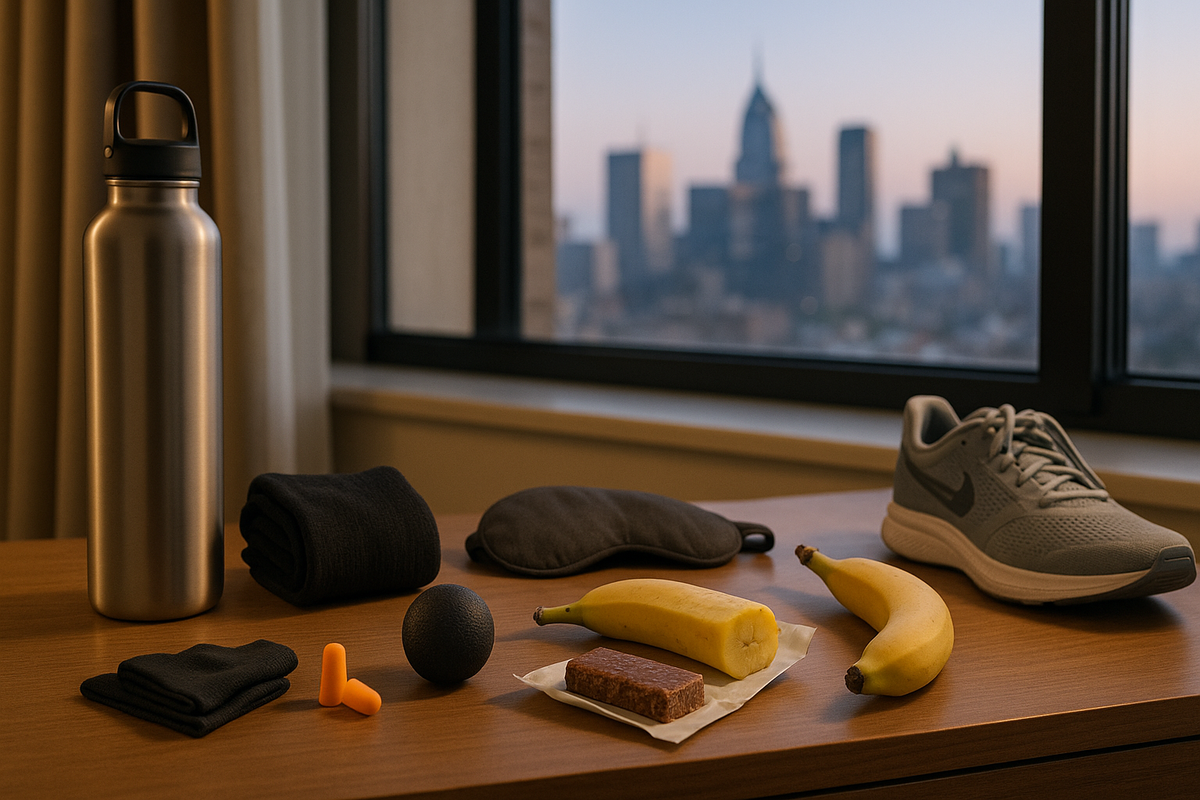
Dietitian-approved travel snacks include packaged hard-boiled eggs, hummus, individual cups of cottage cheese, nuts and seeds, and fresh fruits. Registered dietitians recommend packing three essential components for any snack: fiber, fat, and protein. For fiber, bring easy-to-pack fruits such as apples, oranges, or bananas; dried fruits also work but are higher in sugar. Solid foods like nuts, protein bars, jerky, and crackers are allowed through TSA security. Liquids and gels, including yogurt, hummus, and nut butters, must be 3.4 ounces or less or purchased after security.
Understanding and Recovering from Jet Lag
Jet lag is caused by a mismatch between a person's normal daily rhythms and a new time zone. It is a temporary sleep problem that usually occurs when you travel across more than three time zones but can affect anyone who travels across multiple time zones. The Sleep Foundation notes that jet lag can affect mood, ability to concentrate, and physical and mental performance.
The general rule of thumb is that it takes about a day per time zone to get back on track, but this will vary on an individual basis, as well as the direction you're traveling. Those who fly frequently, such as business travelers, pilots, and flight attendants, are more susceptible to jet lag. The more time zones crossed, the more likely you feel jet lag.
Pre-Travel Preparation and Light Exposure
A few days before you travel, you can begin adjusting your body's natural clock to the time zone at your destination. Depending on where you are traveling, you may want to adjust your sleep patterns: if traveling west, go to bed an hour or two later than usual; if traveling east, go to bed an hour or two earlier than usual.
Light, especially natural light, has the biggest influence on circadian rhythm. Light from the sun, even on a cloudy day, is a critical signal interpreted by the brain to regulate our internal clock. For eastbound travel, prioritize morning light and avoid late-evening brightness; for westbound trips, seek late-afternoon or evening light and avoid very early bright light on day one. Studies have shown that taking a supplement form of melatonin can help reduce jet lag symptoms.
What This Means for Readers
Editorial analysis — not reported fact:
The rise of travel wellness reflects a practical reality: most of us can't afford to abandon our health routines for a week-long business trip or family vacation. The good news is that staying active, eating well, and recovering from jet lag no longer require heroic effort or perfect conditions.
When booking your next hotel, filter search results by fitness amenities and read recent guest reviews about gym quality. If you're traveling for business and will visit the same city regularly, invest 20 minutes researching which properties offer legitimate strength equipment, not just cardio machines. For weekend trips or vacations, a bodyweight circuit in your room or a hotel with a functional gym can keep you consistent without derailing sightseeing plans.
On travel days, pack snacks the night before: a small cooler bag with hard-boiled eggs, an apple, a small container of nuts, and a protein bar costs less than one airport meal and keeps energy stable through delays. If you're crossing multiple time zones, start shifting your sleep schedule two to three days before departure, and plan outdoor activities at your destination to maximize natural light exposure during the optimal windows for your travel direction.
For travelers managing chronic conditions, dietary restrictions, or specific fitness goals, consult a healthcare provider or registered dietitian before your trip to tailor these strategies to your individual needs. The infrastructure for travel wellness is stronger than ever in 2026, but the responsibility to use it still falls on each traveler.
Sources & Further Reading
- Sleep Foundation: Jet Lag — comprehensive guide to causes, symptoms, and science-based recovery strategies
- SELF: How to Make the Most of a Hotel Gym Workout — practical workout adaptations and equipment substitutions
- CNN Travel: Hotel Gyms Are Getting Better — industry trends and examples of premium hotel fitness facilities
- Health: Best Healthy Travel Snacks — dietitian-approved snack ideas with macronutrient breakdowns
- SELF: How to Eat Healthy at the Airport — strategies for navigating terminal food options
- Levels Health: How to Eat Healthy at the Airport — metabolic health perspective on travel nutrition
- Skift: Wellness Tourism Report 2024 — global traveler preferences and wellness amenity trends
- AARP: Fitness Apps for Healthy Living — how apps adapt workouts to available equipment
Editorial coverage of publicly reported health, fitness, wellness, nutrition, and active living developments. Move Weekly has no commercial relationship with any companies, gyms, studios, brands, events, experts, products, or organizations named.